Best small automatic cars 2026: The top 10 for city & motorway driving

| Written by: Bear Kilpatrick | Last updated: 4th February 2026 |
More new drivers than ever are opting for an automatic licence. And with good reason. Small automatic cars are just as good as their luxury stablemates. In the electrified future, a clutch pedal will be as alien as a manual choke. Why make life complicated?
Until recently, small automatic cars often featured compromises of screaming CVTs, flaky automated manuals, or just poor performance if fitted with a traditional torque convertor. Even Japan's masterful miniature autos struggled with small engines. Thanks to electric, hybrid and dual-clutch technology, a small automatic is now a better city and urban solution than many larger cars.
Top picks at a glance
- Best overall: Toyota Aygo X
- Best EV: Renault 5
- Best premium: MINI Cooper
- Best for space: Honda Jazz
- Best value: Leapmotor T03
- See the full top 10
2026's small automatic cars offer smooth efficient progress and the benefits of modern adaptive cruise control and driver assistance in a compact package that's also capable of effortless motorway progress. Just a few years ago finding 10 small automatics worthy of the word 'best' would have been difficult.
There are plenty of small automatics to choose from but we're confident there's something for everyone in this year's best small automatic cars. Find out how we test cars.
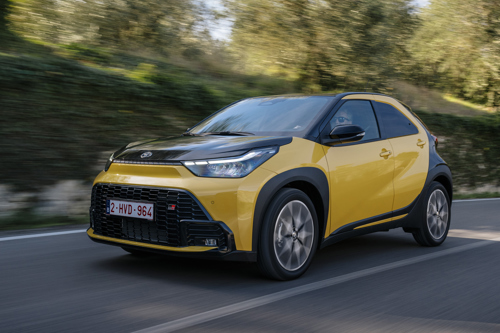
Toyota Aygo X Hybrid: best for reliability
Why buy it
- Award-winning reliability and exceptional fuel economy in town
Why avoid it
- Rear seats are cramped, poor over-shoulder visibility
Still considering a Toyota Yaris? The freshly updated Toyota Aygo X is closing the gap, thanks to the introduction of the same 116PS 1.5-litre hybrid engine in place of the 72PS 1.0-litre petrol. It means all new Toyota Aygo X models are automatic. After thousands of miles we found this to be the best small automatic car around thanks to its good ride, fun handling and a quality feel throughout.
Unfortunately it's quite expensive - the cheapest Toyota Aygo X is now over £21,000. It's undercut by several small electric cars as well as the Hyundai i10 and Kia Picanto, but we think it's worth the premium. Those rivals have only half the power and worse economy.
In our opinion, the new Aygo X is great value even before considering Toyota's reputation for quality and 10-year warranty. That value for money factor remains if you're considering an entry level Yaris. The Aygo X offers almost as much boot space and you'll get the top spec GR Sport for around the same price as a basic Yaris.
Against its rivals here, the Toyota Aygo X stands out, as few affordable new cars under 3.8m long offer this much power and refinement. It's probably the cheapest new small automatic car you'll find that will handle long motorway drives in comfort without the range anxiety of an EV.
Read our full Toyota Aygo X review
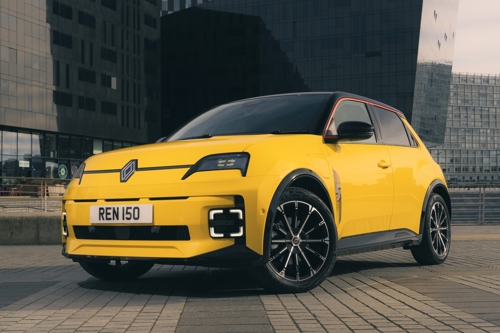
Renault 5 E-Tech: best for style and retro cool
Why buy it
- Impressive EV range plus a premium, tech-heavy interior
Why avoid it
- Tight rear legroom and confusing steering wheel stalks
Retro can often look contrived, but Renault's 5 E-Tech takes some distinctive elements of the pioneering 1972 Renault 5 supermini and applies them very effectively to a thoroughly modern small electric car. An antidote to the endless parade of SUVs and diluted brand image alike, a visitor from the '70s would easily recognise this as a Renault 5 of the future. Particularly if they see the more utilitarian reborn Renault 4 at the same time.
You won't need the Alpine A290 to convince our time-traveller that cars have got better – even the entry level £21,500 'Evolution' 120ps models achieve 62mph in 9.0 seconds and supports 80kW charging for its 40kWh battery. If you want more than 190 miles claimed range (about 140 real-world, with less impact for winter as all models feature a heat pump) the 150ps, 52kWh models start from around just below £24,000 and as well as a potential 250 mile range, they support 100kW charging and vehicle-to-load battery storage if you have an appropriate off-grid energy system.
Given the Zoe's track record we're confident the Renault 5 E-Tech will be a good used buy with strong residuals. Unlike many rivals, Renault dealers are accustomed to looking after affordable electric cars. You might not find owners want to part with them for a while though. Much like the original, the Renault 5's ability as a capable everyday supermini is matched by an extremely likeable personality.
Read our full Renault 5 E-Tech review
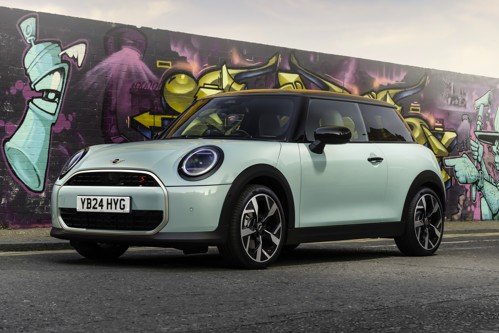
MINI Cooper: best for driving fun and premium feel
Why buy it
- Agile handling, a high-quality cabin and iconic styling
Why avoid it
- Tiny boot plus stiff suspension and an expensive options list
The latest generation of MINI hatch is called the Cooper, separating it from the Countryman and Aceman models. It's a premium small car, with prices starting at over £25,000, but there's no such thing as a basic model – the Cooper C has a 1.5-litre 156ps engine that delivers performance to rival classic hot hatchbacks, let alone the original rally-winning Mini Cooper.
Standard equipment is impressive, and bolstered by simple option packs – meaning that for the price of the top specification Toyota Aygo X GR Sport, you can have a five-door Cooper C Level 1 with adaptive headlights, heated seats. auto-dimming mirrors and even a head-up display. That's on top of 0-62mph in 8.0 seconds and 140mph top speed.
Fuel economy won't match the hybrid Toyota, but ample power and long gearing means the MINI Cooper C is a small car that's never stressed by motorway cruising and long drives. The five-door Cooper C is slightly longer than the three door, and offers 275 litres of boot space and five seats, compared with 210 litres and four seats. If you'd prefer an electric MINI Cooper there's no loss of interior or luggage space, but you can't get a MINI Cooper Convertible with battery power yet.
Read our full MINI Cooper review
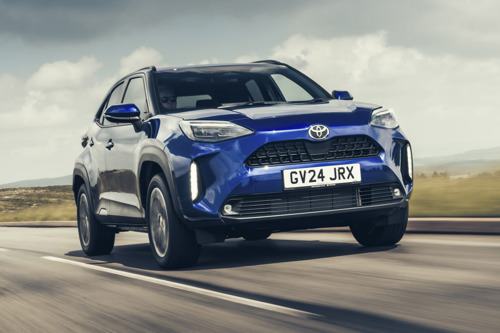
Toyota Yaris Cross: best for efficiency and SUV driving position
Why buy it
- High seating position and impressive real-world hybrid efficiency
Why avoid it
- Dour interior, firm ride feels jiggly over bumps
Now that the Aygo X has been upgraded to a 1.5-litre hybrid, we think it's probably worth choosing between that city car or the small SUV style of the Toyota Yaris Cross, rather than the Yaris. Prices start at just over £27,000 for the Yaris Cross and it's appreciably bigger, with a 351-litre boot and more room for passengers within a 4.2-metre long baby off-roader style body. It's even available with four-wheel drive, albeit as a low-speed traction boost rather than serious off-road tech.
Upgrading to the Cross will cost around £1500 and dropping a trim level over the standard Yaris - that's based on the Yaris making sense once you get the more powerful 130ps engine over the Aygo X. In real terms, the 130ps Yaris Cross Design loses very little compared with the Yaris Excel; dual-zone climate control and a lack of rear cross traffic alert stand out but you gain ground clearance, space and a high driving position.
With trendy styling, a long warranty and strong reputation, the Toyota Yaris Cross offers a useful upgrade in space and flexibility while retaining the economy and low running costs that are hallmarks of Toyota's hybrid models. For many people that would be enough, but it's also rather good to drive, with well weighted steering and sharp responses.
Read our full Toyota Yaris Cross review
Fiat Grande Panda: best for rugged practicality
Why buy it
- Funky design yet very practical, simple physical controls
Why avoid it
- Budget plastics inside, uncomposed on twisty roads.
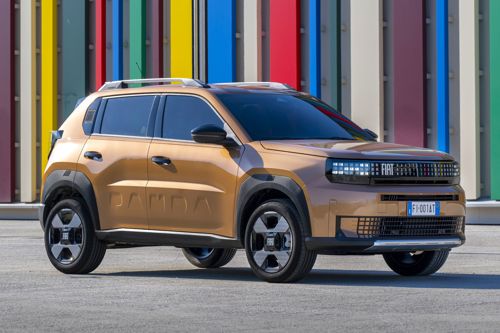
For a car that was once sold as the most basic of vehicles, the Fiat Panda has been given an amazing amount of tech in its latest iteration. The Fiat Grande Panda benefits from a new Stellantis platform with few in-house rivals, and it highlights two new technologies that make small, economical automatic cars really effective – electrification and dual-clutch transmissions – while also bringing a 416-litre boot (less for the electric) and five-door practicality to a car just under four metres long.
With a list price less than £19,000, the entry-level Grande Panda features a 1.2-litre engine with a 48V hybrid system and six-speed DCT auto. Its 110ps power is impressive at this price, though it can't match the Toyota and Honda hybrids for outright economy. With the highest specification La Prima still below £22,000, you can enjoy a generous spec for less than the most basic of rivals. Choose the Grande Panda Electric model and there's a £2000 premium for roughly similar power and a claimed 199 mile range from the 44kWh battery.
Although the Grande Panda shares its platform with the Citroen C3 and Vauxhall Frontera, it's got the most obvious sheet metal and trim differences outside and the interior is a charming and colourful tribute to Fiat's Lingotto factory and the ethos of the original. It feels a bit cheap in places, but looks upmarket for a car at this price point. More to the point, it's a change from the relentless charcoal plastic and fifty shades of grey paint so many brands have decided British buyers want.
Read our full Fiat Grande Panda review
You may also like
- Need a higher driving position? The 10 best small SUVs for a better view
- Ready to go electric? The best small electric cars for 2026
- Want luxury in a small package? The best small luxury cars to buy
Hyundai Inster: best for interior versatility
Why buy it
- Immense interior flexibility, fast-charging and standard heat pump
Why avoid it
- Polarizing pixel design, lots of hard plastics
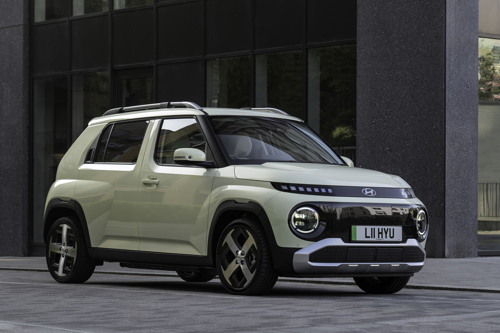
Hyundai's previous small automatic of choice is still on sale - but the i10 has adopted the Kia Picanto's automated manual, which means the longer warranty and fresher styling of its in-house rival makes more sense. If you've got a bigger budget, however, the new Hyundai Inster EV is a clever and distinctive small EV that costs around the same as a Corsa Electric or MINI Cooper E, yet offers the kind of flexibility that means it could be all the car you need.
You'll need to go one step above the entry level Inster to get the key features of an almost bench seat design in the front that makes scooting across from the passenger side if you've been blocked in very easy, and a sliding rear seat that can adjust to give 351 litres of boot space if you don't need the legroom. For greater flexibility you can fold the front seats forward, giving a long load area on one side if needed, or a footrest for lounging in the back while waiting for it to charge.
Charging will be needed fairly often - the biggest battery is 49kWh and with a top speed of 93mph, the long range Inster is likely to fall short of the 229 mile claimed range when driven on motorway runs. The smaller 42kWh option is limited to 73kW charging, the long range, 85kW, so the need to charge more frequently is not compensated for by shorter durations to the reassuring 80%+ figure. This is a car built for cities and that's where it excels.
Read our full Hyundai Inster review
Honda Jazz: best for space efficiency
Why buy it
- Smoothest automatic drive and genius flip-up "Magic Seats
Why avoid it
- Engine drones loudly under heavy acceleration
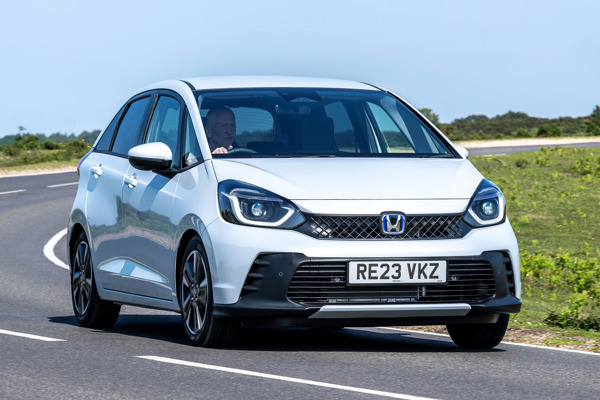
The Honda Jazz has always been a little different to rivals and the latest e:HEV models continue the trend, retaining the clever Magic Seat flexibility that allows the adult-friendly rear seat to flip up and create a tall, wide load area, expanding the already generous 304-litre boot. From the drivers seat cab-forward slim windscreen pillars offer good visibility. It's not a cheap option though - prices start at over £27,000, and the trendy Crosstar Advance is over £31,000.
Adopting the clever Dual Motor Hybrid system first seen in the CR-V SUV means that the Jazz justifies that premium price with impressive real-world economy and performance from the 122ps 1.5-litre powertrain. Using a small battery and clever optimisation of regenerative braking, coasting and full EV modes, the Honda can go further than you'd expect without making use of the combustion engine.
Faced with more challenging roads and driven with enthusiasm, the Jazz shows a very different character. It handles surprisingly well for a tall, practical economy car and uses electric motor torque to good effect, though the engine can get a bit intrusive when pushed. Unusually, the Crosstar has more than just chunky arches to suit tough urban environments. A wider track with tighter turning circle, and 1.5cm extra ground clearance are genuinely useful upgrades.
Read our full Honda Jazz review
Kia Picanto: best for long term ownership
Why buy it
- Excellent 7-year warranty and stress-free city parking
Why avoid it:
- Underpowered on the motorway, automated manual not the smoothest
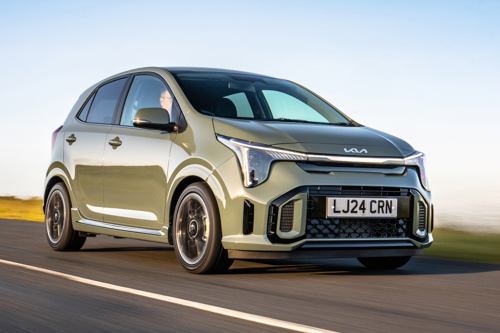
The Kia Picanto is a relatively old model, but looks strikingly modern following a facelift that very successfully updates the basic city car. As a result it doesn't look out of place being sold alongside cutting-edge electric models such as the Kia EV2, and you'll be surprised by the 67ps 1.0-litre engine and old-school mechanical simplicity behind that futuristic fascia. It's one of the cheapest options for a small automatic car, costing from £17,500. We'd go up a level to the £18,500 GT-Line, which upgrades the lighting to LEDs.
One of the few automated manual (AMT) cars on sale in 2026, there's no real difference in refinement or economy when compared with the three-pedal version. It does take longer to reach 62mph however, at 17.2 seconds. It's a big upgrade over the screaming revs of the CVT used in the previous generation, or the power sapping traditional auto used in some models of Hyundai i10.
Now the i10 is no longer on sale and the Picanto use the same type of automatic, the Picanto's seven year warranty and bargain price makes it the sensible choice. Given the i10's list price is almost as expensive as the brand-new Hyundai Inster EV once you upgrade to the 1.2-litre it's understandable it's no longer offered, but it does mean you may find bargains on unsold dealer stock. Will the Picanto be next?
Read our full Kia Picanto review
Fiat 500 Electric: best for city chic & tight parking
Why buy it
- Chic Italian style, effortless one-pedal city driving
Why avoid it
- Rear seats and boot are purely symbolic
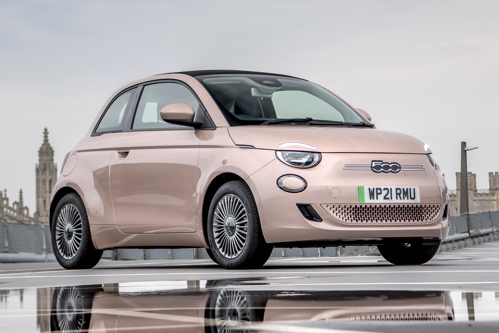
When Fiat replaced the popular and long running reboot of the 500, fans of Italy's Little Mouse were worried that the electric-only move might mean the end of fun, affordable motoring. The hatchback model costs just under £21,000 new for the short-range 24kWh/95ps model but if you want the 42kWh/118ps version, you'll need to budget closer to £27,000 whether you want the three-door hatchback or the open-top 500C.
As the first mass-produced modern electric convertible car, the 500C's fun, but relaxed nature and near-silent drivetrain works really well for adventures to the country. Real-world range is around 170 miles, and 85kW charging means a half-hour stop would be enough for most daytrips when using fast charging networks.
Back in town, the retained full-sides and B-pillars mean you'll feel less vulnerable in congested rush hour traffic, and the roof can be opened partially like a sunroof. Special editions include the Product (red) which supports AIDS charities, fashion house tie-ins such as the Giorgio Armani, and there's a quick Abarth model as well.
Read our full Fiat 500 Electric review
Leapmotor T03: best for unbeatable EV value
Why buy it
- Incredible EV value and a standard panoramic glass roof
Why avoid it
- No Apple CarPlay and intrusive driver safety alerts
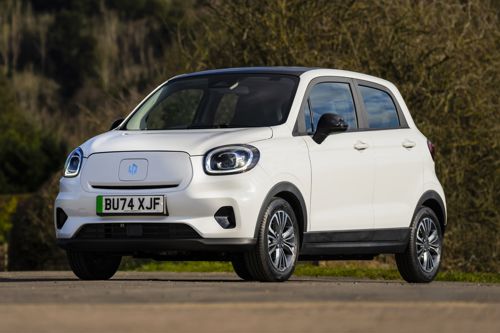
The Leapmotor T03 is a relatively new entrant to the UK market, but it's backed by Stellantis and is positioned as a rival to the Dacia Spring – a task which it tackles impressively, offering generous levels of kit and a longer range for a bargain price. With 0% finance deals the Leapmotor T03 can be as little as £169 per month with a £169 deposit. Owning many 'cheap' used cars can end up costing more per year in tax and maintenance.
Competitive pricing means the Leapmotor T03 is the best small automatic car you can get new for less than financing many out-of-warranty second hand models. Its range of 165 miles may be achievable if you spend most of your time driving at less than 50mph, and the small 37.5kWh battery can be charged at 48kW on a suitable rapid charger.
However, it's the spec you get for that price that makes the Leapmotor worth checking out. Finding an opening panoramic sunroof on a car that has a list price below £16,000 is impressive enough, but when you consider features such as adaptive cruise control, blind spot alert, automatic air conditioning and remote connectivity the T03 is close to being the bargain of the decade, and the compromises are more around the intrusiveness of the beeps and alerts from the safety tech, rather than handling or refinement.
Read our full Leapmotor T03 review
How we test cars: the small automatic methodology
At Honest John, we understand that people buy small automatic cars for one main reason: to make life easier. Whether it’s navigating stop-start city traffic or finding a stress-free way to commute, a small automatic should be smooth, reliable and simple to operate.
Our team of experts has spent thousands of miles behind the wheel of these cars to ensure they meet the demands of everyday British driving. Here is how we reach our verdicts:
- The roundabout & junction test: The biggest complaint with small automatics is often hesitation or delay when pulling away from a standstill. We specifically test every car at busy roundabouts and T-junctions to see how quickly the gearbox responds when you need to merge into a gap. We distinguish between smooth CVTs, DSG boxes and traditional torque converters to tell you which one feels the most natural.
- Urban refinement: A small automatic is at its best in the city. We spend hours in heavy traffic to check for low-speed creep (how the car moves when you take your foot off the brake) and to ensure the gear changes aren't jerky in stop-start queues. We also test the integration of stop/start technology, making sure the engine doesn't cut out or restart in a way that makes the car feel unrefined.
- Motorway manners: Just because a car is small doesn't mean it should feel out of its depth on the motorway. We test these cars at 70mph to see how the automatic gearbox handles overtaking and inclines. We look for hunting, where a car constantly shifts between gears to find power and report on cabin noise levels, as some CVT gearboxes can be vocal under hard acceleration.
- Real-world usability: We don't just drive; we live with these cars. Our testers check parking ease - is the gear selector intuitive? Does the car shift quickly between Drive and Reverse during a three-point turn? Visibility - how easy is it to see out of the back when maneuvering in tight supermarket car parks. Boot space - we use standard-sized luggage and shopping bags to see if the official litre capacity actually translates to useful space.
- Honest feedback & reliability: We combine our professional road test data with the unique insights from our Ask HJ service, Satisfaction Index and Real MPG database. This allows us to spot any common gearbox faults or reliability issues reported by thousands of real owners, ensuring our advice is based on more than just a week-long test drive.
Our reviews are 100% independent. We don't take money from car manufacturers to influence our rankings. Our only priority is helping you find the right car.
Small automatic cars: Frequently Asked Questions
Which small automatic car is the most reliable?
The Toyota Yaris and Honda Jazz are widely considered the most reliable small automatic cars in 2026. Both use robust hybrid systems and consistently top the HonestJohn.co.uk Satisfaction Index. Toyota also offers a service-activated warranty of up to 10 years, making it a favorite for long-term peace of mind.
What is the best small automatic car for city driving?
The Toyota Yaris Hybrid and Renault Clio E-Tech are excellent for urban environments. Their hybrid systems allow them to run on electric power for large portions of stop-start traffic, reducing fuel consumption and providing a near-silent drive. For even tighter spaces, the Kia Picanto remains a top city car choice due to its tiny footprint and easy-to-use automatic gearbox.
Are small automatic cars more expensive to insure?
Generally, automatic gearboxes can be slightly more expensive to insure than manuals because they are more complex to repair. However, many modern small automatics, like the Hyundai i10 and Volkswagen Polo, sit in very low insurance groups (Group 1 to 8), making them highly affordable for new or young drivers.
Why is there a delay when I pull away in my automatic car?
Many small automatics use CVT (Continuously Variable Transmission) or Automated Manual gearboxes, which can sometimes have a slight delay or hesitation when you press the accelerator. DSG (dual-clutch gearboxes) such as those fitted in the Volkswagen Polo or Skoda Fabia are designed to eliminate this but they too have hesitation issues.
Can a small automatic car handle motorway driving?
Yes. While older small automatics often felt strained at high speeds, modern models like the Volkswagen Polo, Peugeot 208, and Hyundai i20 are perfectly capable on the motorway. Look for cars with turbocharged engines (often labelled as TSI, TCe, or PureTech) as they provide the necessary poke for safe overtaking.
Do small automatic cars use more fuel than manuals?
Historically, yes but in 2026, the gap has closed. Modern automatic gearboxes are often more efficient than manuals because they are programmed to shift at the most fuel-efficient moment. Hybrid models like the Honda Jazz can achieve over 60mpg, which is significantly better than most manual petrol cars.
Are small automatics easy to drive?
Small automatic cars are superb choices for those who mainly drive in the city. Instead of having to constantly press a clutch pedal, owners can rest their left leg and left arm, and let the car do all the hard work. If you often drive in traffic, this ease of use is particularly beneficial. You don’t need to learn any special tricks: simply shift the automatic gear stick into ‘D’ for ‘drive’ (or press the equivalent button) and you’re away.
Are electric cars all automatics?
You can’t buy an electric car with a manual gearbox. The technology dictates that they all come in two-pedal automatic guise. This means that embracing the future is particularly easy – again, you don’t need to learn any special techniques to drive an electric car. In terms of driver inputs, they are essentially the same as an automatic. The added bonus of choosing an EV is that you effectively get an automatic gearbox for free.
Are small automatic cars reliable?
The days of small automatic cars sometimes coming with a question mark over their reliability are long gone. Electric cars are probably even more dependable than cars with manual or automatic gearboxes, but a well-maintained CVT or hybrid is unlikely to need any clutch or friction components replacing and the majority of dual-clutch or traditional autos manage to last well beyond 100,000 miles with just routine fluid changes.
Buying a used small automatic car
- Know your technology and look for correct maintenance
- Choose the right gearbox for your style of driving
- Make sure you test all the features
When buying secondhand it's worth checking out reviews and specifications of the model you're interested in, as technology and reliability can change dramatically between generations and engines. For example, Citroen used both automated manual and torque converter transmissions in the C3 and DS3, and the reputation of the former means that the conventional auto can be a bargain. Not that either option is bad, as repairs on the automated manual are not much harder than a regular manual.
To choose which gearbox works best for you, remember that on long drives a small engine and a CVT gearbox will be operating at high revs when under load. If you want a CVT and spend a lot of time on motorways, look for a car with a larger engine. CVT gearboxes do wear out, but most will last hundreds of thousands of miles if given regular fluid changes and calibration.
Automated manuals work well for economy and extra-urban, countryside and hilly areas when well calibrated, but remember that if the car doesn't have a hill-holder function you need to use the handbrake (many won't engage the clutch on brake alone) to avoid jolting or slipping the clutch and wearing it prematurely. These gearboxes are great when paired with a small engine, as they don't waste any energy.
Traditional torque converter gearboxes have a fluid connection between the engine and gearbox, and are great at creeping slowly, smooth progress and refinement. They do have gears - so economy doesn't need to suffer too much on long drives – but they're quite inefficient at slower speeds. They suit medium power outputs and are often found on older Japanese cars and imports. Maintenance is crucial, and many add the extra complexity of sharing the radiator with the engine so neglected cooling systems can affect the gearbox as well.
The dual-clutch transmission is arguably the best of all. It combines the efficiency of a manual with the sort of sophisticated programming and control that can handle slow manoeuvres, hill starts and reversing with ease. You'll find it on many Volkswagen Group models from Audi to VW, and variants from other marques such as Ford. Beware neglected maintenance on these – Ford's version of the technology earned a bad reputation, but not all dealers realised that the gearboxes need more frequent servicing than either a manual or traditional auto.
As with bigger cars, particularly now the small car market is saturated with automatic options when once, they were very rare – compare your annual or monthly costs and budget with a new finance package. You may find a new car (such as the Leapmotor T03) offers a much cheaper and less stressful experience.
What's the best small automatic car for an older person?
What used automatic small car should I buy?
What's the best small automatic car to buy with the lowest insurance rating?