
Best plug-in hybrid cars 2026: Top 10 PHEVs on sale

| Written by: Keith WR Jones | Last updated: 14th May 2026 |
If you like the idea of owning an electric car but you're not quite ready to say goodbye to a conventional combustion engine, a plug-in hybrid (PHEV) could be the answer. Some would argue that they offer the best of both worlds.
Unlike self-charging hybrids which offer only a limited amount of electric driving range, PHEVs are designed to be plugged in to recharge the battery, with most models providing enough range to complete several days’ commuting. When the battery's flat, simply recharge it using a home wallbox.
Top picks at a glance
- Longest electric range: Skoda Superb Estate iV
- Best for family life: Volkswagen Multivan eHybrid
- Best for driving enjoyment: Mercedes CLE300e Coupe
- Best for luxuriousness: Range Rover Sport P460e
- Best for value: MG HS Plug-in Hybrid
- See the full top 10
PHEVs aren’t all good news, though. They are usually more expensive to buy than both self-charging hybrids and fully electric versions of the same or similar models, plus they operate most efficiently when their batteries have been charged. If you choose not to or you can’t plug in at home, their fuel efficiency takes a major hit, due to carrying around the weight of a larger battery pack.
Company car drivers who don’t want to or can’t go fully electric will enjoy Benefit-in-Kind (BiK) tax advantages by choosing a PHEV over other types of cars, providing they can cover a substantial number of miles electrically. That low-BiK attraction ends in the 2028-29 financial year, though.
- Find out how we test plug-in hybrid cars at HonestJohn.co.uk
What is the difference between a hybrid and a plug-in hybrid?
There is more than one type of hybrid. A regular or ‘self-charging’ hybrid has a limited electric-only range due to the smaller size of its batteries, which are recharged during braking. A plug-in hybrid has a far larger battery – often 10 times the size of a regular hybrid – to give a longer range for pure electric driving. However, as the name suggests, you have to plug it in when the battery goes flat, or you will effectively be driving a (heavier) pure petrol car.
Is a PHEV better than a hybrid?
If you are able to recharge at home every night, a plug-in hybrid is a great stepping stone to a pure electric car. If your daily driving can usually be completed in EV mode, it may demonstrate that an electric car works for you. Alternatively, it could just be a good weekday EV, with the petrol engine supporting longer weekend drives. A regular hybrid car doesn’t have this flexibility – although it does offer the advantage of never needing to be plugged in.
Which plug-in hybrid has the best range?
The Range Rover P440e has the highest electric-only range of new plug-in hybrids, with up to 70 miles, although it’s very expensive. Thanks to a particularly large battery, the Mercedes-Benz C 300 also impresses, with up to 70 miles of range available in the saloon version: almost as good as some older electric cars. The BMW X5 is also good, with 67 miles on a fully charged set of batteries.
1. Skoda Superb Estate iV: Best PHEV overall
Why buy one?
- A great all-rounder and a great PHEV rolled into one
Why avoid it?
- Naysayers’ unnecessary Skoda snobbery
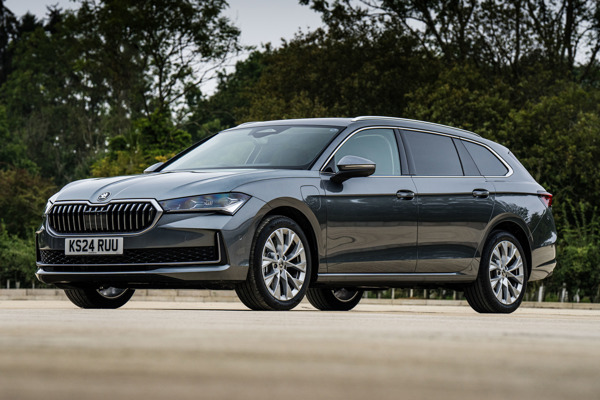
Our testers rate the Skoda Superb Estate as one of the very best family cars on sale, so you’re onto a winner from the get-go. There’s loads of interior space for five adults, with a capacious 510 litres of boot space behind when loaded to the window line. Fold the rear bench over and loaded to the roof and it will swallow a van-like 1770 litres. Great for people lucky enough to have something called a lifestyle.
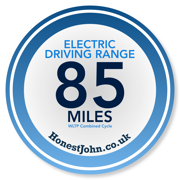
Powering the Superb Estate iV – that suffix is how Skoda promotes its PHEV models – is the same mechanical set-up as you’ll find in the Golf eHybrid. We rave about how punchy a performer it is with 204PS at your right foot’s disposal, yet despite the Skoda being a much larger car than its VW cousin, its electric-only driving range is only three miles worse.
Equipment levels are generous for the Superb Estate iV even with the entry-level SE Technology trim, so you don’t need to spend loads more to get the kit which you’ll most want. Its well-built interior is largely formed form high-quality plastics, although some areas lower down the cabin feel a bit cheap and the driver’s display screen looks like an afterthought sat in front of a curved hood.
These are but mild complaints in what is a super-comfy wagon made all the more refined and smooth thanks to its PHEV drive system. Don't let those hung-up on Skoda's cheap cars from 40 years ago put you off.
Our pick: Superb Estate SE Technology 1.5 TSI iV 204PS DSG
Price: £41,580
2026-27 Benefit-in-Kind tax band: 7%
AC charging time: 0-100% @ 7kW in circa 3 hours 55 minutes
DC charging time: 5-80% @ 40kW in 26 minutes
Read our full Skoda Superb Estate review.
2. Volkswagen Golf eHybrid: Best small family PHEV hatch
Why buy one?
- A quality, long electric range PHEV in a compact package
Why avoid it?
- It’s good, but not as imperious as earlier Golfs
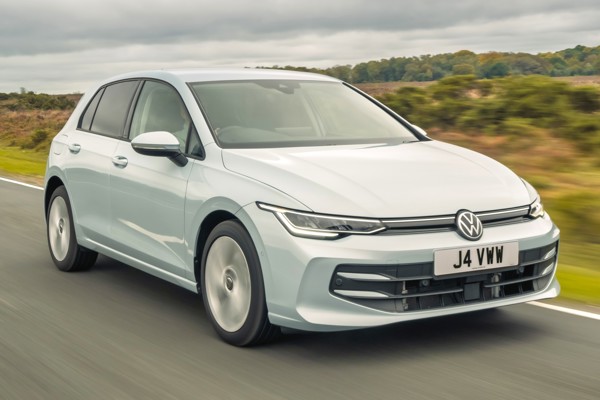
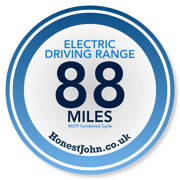
It seems that no matter what the car-related question is, there’s a Volkswagen Golf which can provide the answer, including two flavours of PHEV. Our testers’ pick is the 204PS eHybrid with the same drive system as the Skoda above giving an 88-mile electric range, but there’s a sportier 272PS Golf GTE also available, which still offers up to 81 miles of battery powered driving.
We’ve gone for the Golf eHybrid in excellent value Match specification, packed with all the essential equipment you’re likely to need, yet it’s priced below £36,500. High quality interior materials continue to be a Golf hallmark, although we’re not big fans of its largely button-free interior, despite improvements made to it in 2024.
If you’re considering swapping from a previous-generation Golf to today’s shape or from a competitor model, we reckon you’ll like what you find but it doesn’t feel like such a noticeable step change over its rivals in the way Golfs of old used to.
Despite the Golf’s compact external dimensions, it’s a spacious, family-friendly hatchback although the eHybrid’s 273-litre boot is a chunky 108 litres down on non-PHEV models, so you may need to pack smarter for trips away. A minor inconvenience given how little fuel you’ll burn through getting there.
Our pick: Golf Match 1.5 TSI eHybrid 204PS DSG
Price: £36,490
2026-27 Benefit-in-Kind tax band: 7%
AC charging time: 0-100% @ 7kW in circa 3 hours 55 minutes
DC charging time: 5-80% @ 40kW in 26 minutes
Read our full Volkswagen Golf review.
3. MG HS Plug-in Hybrid: Best PHEV for value
Why buy one?
- Cost-effective long electric range family SUV
Why avoid it?
- Poor engine refinement and fiddly touchscreen system
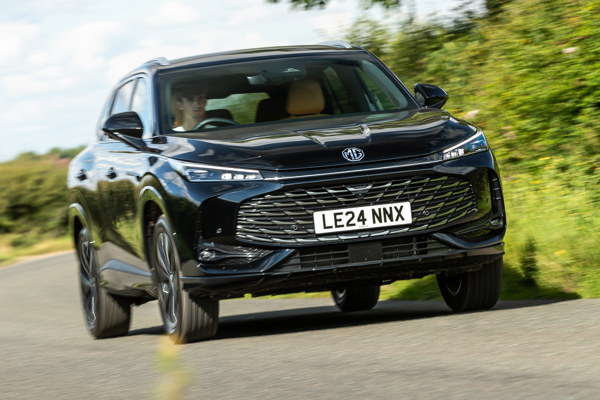
One of the secrets to the MG HS’s sales success is its great value for money, which is exemplified by the Plug-in Hybrid versions. Priced from £32,500 this is your cheapest way into a PHEV which can cover 75 miles of electric-only driving according to the WLTP Combined cycle tests.
Our testers were impressed by the MG’s smart and spacious cabin as well as its high levels of standard kit, even in entry-level SE trim. There’s plenty of power on tap as well with the HS Plug-in Hybrid able to dart from a standstill to 62mph in just 6.8 seconds.
It’s a shame that its combustion engine sounds unrefined and the driving experience his hampered by intrusive safety assistance gear, though.
While we don’t ordinarily recommend charging PHEVs using public stations with quicker DC chargers, it’s a shame that you can’t use such facilities with the MG if you wanted to – it’s limited to using AC chargers, such as domestic wallboxes.
Our pick: HS SE 1.5T Plug-in Hybrid
Price: £32,495
2026-27 Benefit-in-Kind tax band: 7%
AC charging time: 0-100% @ 7kW in 4 hours
DC charging time: N/A
Read our full MG HS review.
4. BYD Seal U DM-i Comfort: Best family PHEV SUV
Why buy one?
- Masses of car and kit for the money
Why avoid it?
- As interesting as a wet weekend in Doncaster
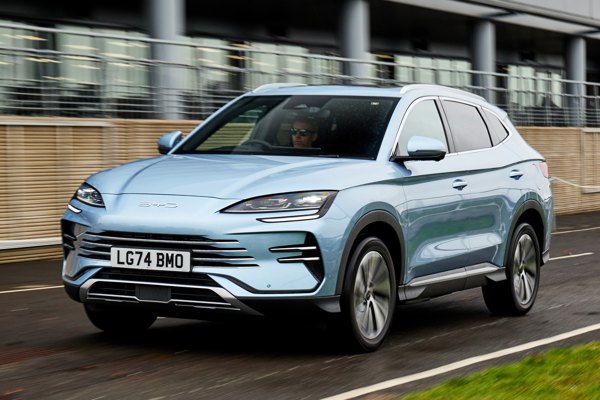
It’s unlikely to have escaped your attention how many BYD Seal Us that you spot as you drive around the UK. It’s one of the best-selling PHEV SUVs and our testers fully grasp why – it’s spacious, packed with equipment, great value and particularly if you go for the Comfort version and its larger battery, really fuel efficient with a long electric range.
If the Comfort’s 78-mile electric range is more than you need, the £2k cheaper Seal U DM-i Boost might be of interest – it can still cover 50 miles on battery power alone.
Unlike some other Chinese PHEVs, we’re impressed by the BYD’s mechanical refinement, with a much quieter combustion engine than those fitted to its rivals. It’s also really supple when it comes to ride quality, but we felt this is at the expense of body control. Yes, it’s great that rough road surfaces are ironed-out, but it’s not ideal that the Seal U wallows and leans through corners.
While the Seal U DM-i Comfort is able to handle a DC charging connection, it’s limited to just 18kW, making it a potentially expensive way to not even get triple the charging rate you would at home. Another reason not to plug this PHEV in at public stations.
Our pick: Seal U DM-i Comfort
Price: £36,995
2026-27 Benefit-in-Kind tax band: 7%
AC charging time: 15-100% @ 7kW in circa 4 hours 30 minutes
DC charging time: 30-80% @ 18kW in 55 minutes
Read our full BYD Seal U review.
5. Jaecoo 8 SHS-P: Best 7-seater PHEV SUV
Why buy one?
- Comfort and interior quality match more expensive cars
Why avoid it?
- It’s more expensive than the closely related Chery as a result
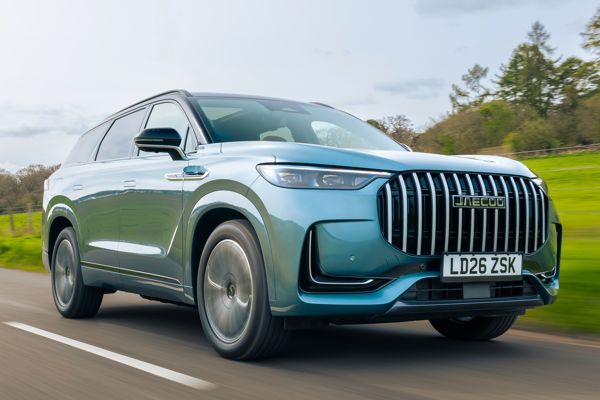
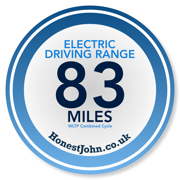
Our testers were deeply impressed by the Jaecoo 8 when they recently put it through its paces. So much so that they ranked it above the Chery Tiggo 9 it shares its platform and plug-in hybrid drive system with, despite the Jaecoo being both more expensive and have four fewer miles of electric range.
There are two seating configurations available for the Jaecoo 8, with our pick being the less expensive of them. That means seven seats in Luxury specification instead of spending two grand more for the six-seater Executive – its three-seater second row bench has been replaced by a pair of captain’s chairs which recline and massage their occupants.
We were really impressed by how much more resolved the 8 feels compared with the Jaecoo 7 PHEV, with a much more comfortable and settled ride quality, although the over-nannying driver aids still require finessing.
Our pick: 8 SHS-P Luxury 7-seat
Price: £45,500
2026-27 Benefit-in-Kind tax band: 7%
AC charging time: N/Q
DC charging time: 30-80% @ 40kW in 20 minutes
Read our full Jaecoo 8 review.
You may also like
- Prefer not to plug in? These are our 10 favourite self-charging hybrids
- On the hunt for a long-range EV? Here are the top 10 which go the furthest
- Are PHEVs affected by 2028’s pay-per-mile EV tax? Our eVED guide explains all
6. Mercedes C-Class C300de: Best PHEV diesel
Why buy one?
- It looks far more expensive than it is
Why avoid it?
- Some interior fixtures aren’t good enough for its price tag
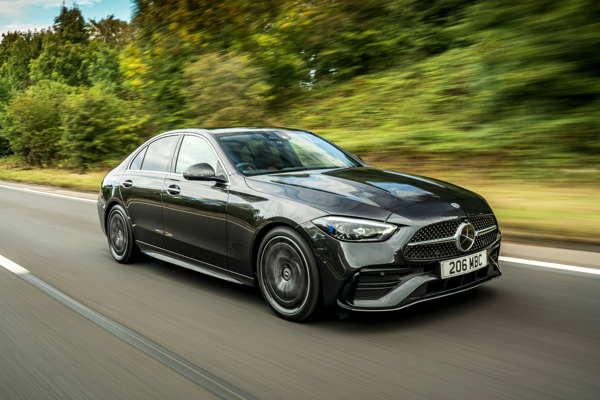
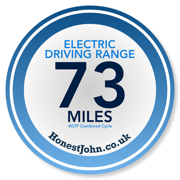
We’ve gone for something of an unusual option when it comes to PHEVs with the Mercedes C-Class Saloon – a diesel engine. Badged C300de, it's sold alongside a petrol-powered equivalent labelled C300e, but the diesel version has a two-mile electric range advantage and is more fuel efficient when driven on longer, motorway-type journeys.
If you fancy a C-Class PHEV but you primarily undertake shorter journeys, we’d suggest you’ll find the petrol version less thirsty and it’s £2250 cheaper to buy. But for high-mileage company car drivers, the C300de could be a winner.
Looks-wise, the C-Class has long been styled to resemble a scaled-down facsimile of the luxurious Mercedes S-Class, with a similar interior style as well. However, you won’t have to poke around too long before finding some interior plastics which would feel out of place in a car £20k less expensive.
We rate the C-Class’s ability as a super-comfy cruiser, but while it handles neatly it’s not as much fun as a BMW 3 Series if that’s your thing.
Passenger space front and rear is reasonably good, with excellent, supportive seats, although boot space is tight at 315 litres – note that non-PHEV C-Class Saloons offer 455 litres, but the battery pack has to go somewhere. For an extra £2250 you could opt for the C300de Estate instead and enjoy its greater practicality, although its electric-only range dwindles to 69 miles, pushing it into the 10% Benefit-in-Kind tax band.
Our pick: C300de Urban Edition Saloon
Price: £53,000
2026-27 Benefit-in-Kind tax band: 7%
AC charging time: 10-100% @ 7kW in 3 hours
DC charging time: 10-80% @ 55kW in 20 minutes
Read our full Mercedes C-Class review.
7. BMW 2 Series Active Tourer 225e: Best small PHEV MPV
.jpg?rmode=max&width=600)
Why buy one?
- A fun-to-drive, spacious family hold-all
Why avoid it?
- It’s hard to imagine a BMW looking less athletic
Due to the popularity of less space-efficient SUVs, purpose-designed compact MPVs – rather than ones based on vans – are something of a rarity these days, which makes the fact this one is made by [re-checks notes] BMW even more of a surprise.
Yes, the BMW 2 Series Active Tourer is a spacious five-seater, available with a choice of two all-wheel drive PHEV systems, although it’s the cheaper 225xe version which we’re concentrating on here. It produces enough power to squirt from 0-62mph in just 6.7 seconds and we were wowed by how much fun it is to drive. It’s a pity its styling isn’t in keeping with that athleticism.
Still, being pudgy and upright means there’s plenty of room inside for passengers and their belongings, with a modest 9-litre drop in boot capacity compared with non-PHEV Active Tourers at 406 litres.
If you can get beyond its appearance, our testers say the 2 Series Active Tourer is one of BMW’s best-kept secrets, being compact enough to be easy to use in urban settings while large enough to feel comfortable and planted out of town. No DC charging available here, though, but that shouldn’t put you off, but a 10% BiK banding for company car drivers may dilute its appeal.
Our pick: 225e xDrive Sport Active Tourer
Price: £40,295
2026-27 Benefit-in-Kind tax band: 10%
AC charging time: 0-100% @ 7kW in circa 2 hours 30 minutes
DC charging time: N/A
Read our full BMW 2 Series Active Tourer review.
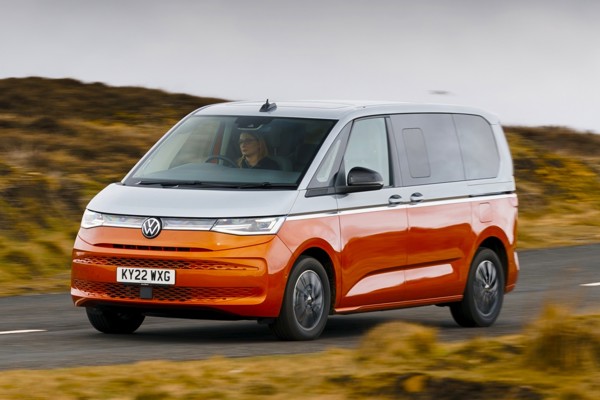
8. Volkswagen Multivan eHybrid: Best 7-seater PHEV MPV
Why buy one?
- Masses of room in a flexibly arranged passenger cabin
Why avoid it?
- Pricey to buy, van-ish to look at
Despite being developed by its Commercial Vehicles division, being clothed in van-like body and being badged Volkswagen Multivan, this plug-in hybrid is a car-based, MPV. It’s not a fashionable choice in a world dominated by large SUVs, but the Multivan eHybrid’s seven-seater interior is far more spacious and useable than most faux-by-fours’ cabins.
Its platform isn’t that far removed from what the Golf eHybrid rides on, although this large VW has the additional traction of 4Motion all-wheel drive. We wouldn’t choose the Multivan specifically for that, but as it’s not available without it, it’s the default choice in the default large MPV. Of course, extra driven wheels also means more energy’s expended, partly explaining the significant drop-off in electric range compared with the Golf and the Superb Estate iV.
Overall our testers were deeply impressed by the Multivans breadth of talents as a consummate family car with ample accommodation for seven adults. Larger families may feel it’s worth sacrificing a mile of electric range and spending an extra £1500 on the Long body option with more boot space. As with most large people carriers, we found the Multivan’s ride can be bouncy and unsettled when there’s only the driver aboard.
We were taken by the quality of the VW’s interior fixtures and fittings, reinforcing this isn’t a van which has had a glow-up, although the infotainment system’s fiddliness is sorely in need of sorting – it will be later in 2026 when the Multivan’s mildly facelifted.
Our pick: Multivan Life Standard 1.5 TSI eHybrid 4Motion 245PS DSG
Price: £55,360
2026-27 Benefit-in-Kind tax band: 10%
AC charging time: 0-100% @ 7kW in circa 3 hours 55 minutes
DC charging time: 5-80% @ 40kW in 26 minutes
Read our full Volkswagen Multivan review.
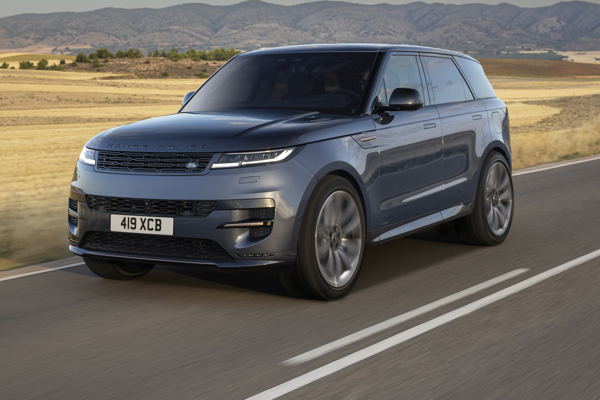
9. Range Rover Sport P460e: Best luxury PHEV SUV
Why buy one?
- Exceptionally capable on- and off-road
Why avoid it?
- Stereotypical image won’t suit everyone
Almost every facet of the Range Rover Sport is amplified to a super-size scale. It costs the thick end of £100k, it weighs over 2600kg yet it can dart from nothing to 62mph in 5.6 seconds and it can potentially travel up to 73 miles under battery power alone when you opt for the P460e model.
While the Sport lacks the prestige of the full-size Range Rover, which is also available in PHEV form, in most senses it remains a truly luxurious SUV, generous in space and of equipment even in relatively low-ranking SE specification.
Our testers were wowed by the Range Rover Sport’s other-worldly ability to handle with dynamic aplomb on asphalt yet remained true to its Land Rover heritage by being mountain goat-like across trickier terrain.
The particularly large bluebottle in the Range Rover Sport’s ointment is Land Rover products still have something of a patchy record when it comes to reliability, much of which only becomes apparent after a few years’ use. Some reassurance is provided by the PHEV battery’s separate eight-year/100,000-mile warranty.
Specify yours wisely in a strong colour combination inside and out, keeping your windows free of dark-tinted privacy glass and your alloy wheels silver – it will be reassuring to other motorists that you’re not subscribing to the typical Range Rover Sport drivers’ image.
Our pick: Range Rover Sport SE P460e
Price: £91,910
2026-27 Benefit-in-Kind tax band: 7%
AC charging time: 0-100% @ 7kW in circa 5 hours
DC charging time: 0-80% @ 50kW in 40 minutes
Read our full Range Rover Sport review.
10. Mercedes CLE Coupe CLE300e: Best PHEV coupe
Why buy one?
- The status associated with driving a coupe
Why avoid it?
- If you need to regularly use the back seats, maybe have a rethink
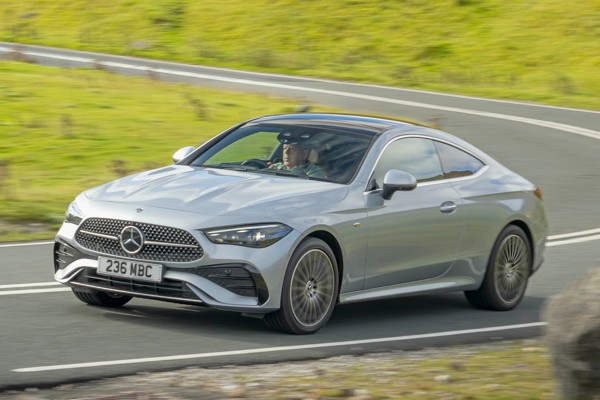
Another unusual PHEV wearing the hallowed three-pointed star logo. Yes, outside of high-end supercars, the Mercedes CLE is unusual in being a coupe that’s fitted with a plug-in hybrid drive system.
In many respects, the CLE300e is similar to the four-door Mercedes C-Class PHEV, but there’s no option of a diesel-engined plug-in, nor is the drive system also used in the soft-top Mercedes CLE Cabriolet. Also missing is the C-Class’s DC charging capability, although this shouldn’t be a major hindrance.
Although by its very nature the CLE appears to be a sportier choice, it isn’t a sports car – in fact, it’s unique among the CLE range for being fitted with comfort-tuned suspension with a self-levelling function on the rear wheels. This is a good thing.
What buying a coupe does say about its owners is that they’ve made a purchase specifically for them – it’s a status symbol in other words. The CLE300e driver is telling the world that yes, it may have rear seats, but they’re cramped and not especially comfy, while the small boot opening and just 320 litres of space within limits its practicality – and deliberately so.
Our testers like that this Mercedes is a PHEV people will buy with their hearts rather than their heads, but we’d like to see the interior quality lifted to more closely reflect the CLE300e’s price.
Our pick: CLE300e AMG Line Premium Coupe
Price: £61,625
2026-27 Benefit-in-Kind tax band: 7%
AC charging time: 0-100% @ 7kW in 3 hours
DC charging time: N/A
Read our full Mercedes CLE Coupe review.
How we test cars: the plug-in hybrid car method
Analysing the fundamentals of cars is how we test them here at Honest John. Our editorial team’s expertise comes from a thorough understanding of vehicles across all types and kinds. To select our top 10 best plug-in hybrid cars for 2026, our experts have focused on the following:
-
Driven over 10,000 miles: We've taken PHEVs across every type of route imaginable – from tight city streets and winding cross-country A- and B-roads to major motorways. We've tested them on the best and worst conditions British roads have to offer.
-
Prodded and parked: To accurately assess how different cars will fit into your lifestyle, we evaluate how they handle our own daily routines. This means constantly folding over the back seats, installing Isofix child seats, navigating multi-storey car parks and practically everything else – including seeing how much we can load into the boot for a trip to the recycling centre.
-
Real EV Range: To find out the true electric-only range of PHEV cars in everyday conditions, we drive them extensively on battery power. We also evaluate the charging experience, testing both home wallboxes and public charging infrastructure, including domestic AC and public DC chargers.
-
Owner Feedback: Every year, our readers share their real-world experiences with us through the Honest John Satisfaction Index, highlighting the best and worst cars for reliability. Once we identify the top performers and the ones to avoid, we ensure you have that information, too.
Our reviews are 100% independent. We don't take money from car manufacturers to influence our rankings. Our only priority is helping you find the right car.
Frequently asked questions about plug-in hybrid cars
Do PHEVs still work if they haven’t been plugged in?
Yes they do, but it makes them operate at their least fuel efficient, making the ownership experience both frustrating and far more costly than it needs to be.
PHEVs are designed to be at their most efficient when they have been plugged in and their batteries have been charged to 100% capacity. When that’s happened, depending on how far you drive before plugging it in again, it’s possible that the combustion engine will never burst into life. While that’s an attractive thought at a time when fuel costs are continuously rising, the reality is an EV – which would have been cheaper to buy in the first place – would suit your typical driving requirements even better.
When PHEVs aren’t plugged in they operate more or less the same way as a conventional self-charging hybrid, where the combustion engine both drives the car and generates electricity that’s stored in the battery pack for the on-board electric motors to use.
While that sounds like good news, it isn’t really. PHEV battery packs are usually much larger than those in self-charging hybrids, accompanied by additional electrical cables and on-board chargers to accept the supply of electricity. Each adds cost and weight, so they are more expensive to buy than regular hybrids and less fuel efficient due to hauling around all that redundant kit.
Several PHEVs allow you to select a drive mode which enables the engine to fully charge the battery pack as you drive along. As you might imagine, this is a very fuel inefficient process and no something we would recommend.
Similarly, while many PHEVs also enable DC charging at public service areas, the cost of doing so is very unlikely to be recouped by driving the car on battery power alone afterwards. If you can’t have a domestic wallbox installed at home to charge your PHEV, only using public DC chargers is not a sensible economic decision.
Why do hardly any PHEVs have a diesel engine instead of a petrol one?
Although other brands have tentatively dipped their toes in the diesel-engined plug-in hybrid waters, only Mercedes continues to swim in that particular pool and we don’t expect that to change anytime soon.
It’s also worth noting that for each model range Mercedes sells diesel PHEV versions of – identifiable by the ‘de’ after the numerical element of the badge on the back – there is also a petrol PHEV equivalent, so it hasn’t gone all in. Its diesel PHEVs are available in the C-Class, E-Class, GLC and GLE ranges.
Diesel engines are generally more fuel efficient than petrols of similar capacities and power outputs, meaning those Mercedes models so equipped can theoretically go further on a single charge and tank of fuel, but consumer preference among PHEVs is for greater levels of smoothness and overall refinement, which is a key part in petrol engine’s dominance.
Petrol engines also reach their optimal working temperature far quicker than diesels, so it’s easier for them to work more efficiently as and when they kick in. As with all diesel cars, they work most efficiently when used for long journeys at relatively constant speed cruises, not stop-start-stop driving.
Which is the cheapest PHEV currently on sale?
The least expensive plug-in hybrid currently on sale is the £29,990 Geely Starray EM-i with a WLTP Combined cycle electric driving range of 51 miles.
Factoring in a minimum 70-mile electric miles of range requirement, the least expensive is the £32,495 MG HS Plug-in Hybrid which appears in our top 10.
What are the tax advantages for company car drivers choosing a PHEV?
In terms of Benefit-in-Kind (BiK) taxation, plug-in hybrids can reduce costs over all cars barring full EVs, but there’s not a single low tax band which is applicable to all PHEVs as the calculations take into account both CO2 emissions and electric-only driving ranges.
When a PHEV’s CO2 emissions are measured at 51g/km or higher on the WLTP Combined cycle, then the BiK bandings are the same as all other combustion-engined cars, with the lowest tax rate being 17% for 2026-27.
Providing CO2 emissions are 50g/km or lower, PHEVs are then banded into one of five taxation levels according their electric-only ranges. For the 2026-27 financial year those BiK bands are:
- 29 miles or lower: 16%
- 30-39 miles: 14%
- 40-69 miles: 10%
- 70-129 miles: 7%
- 130 miles or higher: 4%
For reference, no PHEV currently on sale has an electric-only driving range that enables it to be placed in the 4% BiK band.
For 2027-28 each of those aforementioned BiK bands increases by 1%, but more significant changes occur for 2028-29 when the mileage bandings for PHEVs emitting 50g/km or less of CO2 are merged, with a uniform rate of 18% applied to all of them. Over the same period, taxation for EVs also increases, but only to 7%.
Which currently available PHEVs have the longest electric-only driving ranges?
We thought you might ask that, which is why we’ve produced a separate guide to the plug-in hybrids with the longest electric driving ranges. Today that list is topped by the Omoda 9 SHS-P with a WLTP Combined cycle claim of 93 miles of battery-powered driving potential.
Which currently available PHEVs have the shortest electric-only driving ranges?
It sounds bizarre, but four high performance Mercedes-AMG PHEVs have an electric-only driving range of just seven miles. Yes, you read that correctly, seven miles.
For the Mercedes-AMG C63S Saloon, the C63S Estate, the GT63S and the SL63S, the PHEV system is marketed under the E Performance banner, signifying that the electric drive elements are purely there for speed, not for out-and-out efficiency.
There are also three other PHEVs on sale which can’t achieve the 30-mile electric range for the 16% BiK taxation banding. That said, the Jeep Renegade 4xe (22 miles), the Jeep Grand Cherokee 4xe (28 miles) and the Volkswagen Touareg eHybrid (also 28 miles) are all models which are imminently disappearing from price lists anyway.
