
Best electric cars 2026: Top 10 EVs for value and range

| Written by: Mark Nichol | Last updated: 2nd March 2026 |
It’s still tempting to think of electric cars as just one big class of their own. Like, there are SUVs, coupes, saloons, hatchbacks and… electric cars. They still somehow feel new and unusual and distinct from a "normal" car.
But now, one in four new cars sold are fully electric car. And right now there are 148 different EV models on sale in the UK (and probably a few more by the time you’re reading this). They’re no longer ‘specialist’ and the choice is vast.
Top picks at a glance
- Best overall: Renault 5 E-Tech
- Best for family life: Kia EV3
- Best for long-distance travel: Audi A6 e-tron
- Best for fun: MG Cyberster
- Best for driver satisfaction: Porsche Macan Electric
- Best for value: MG 4 EV
- See the full top 10
So here are the best electric cars you can buy in the UK today. We’ve included a mix of sizes, styles and prices, so there should be something here for you.
- Find out how we test electric cars at HonestJohn.co.uk
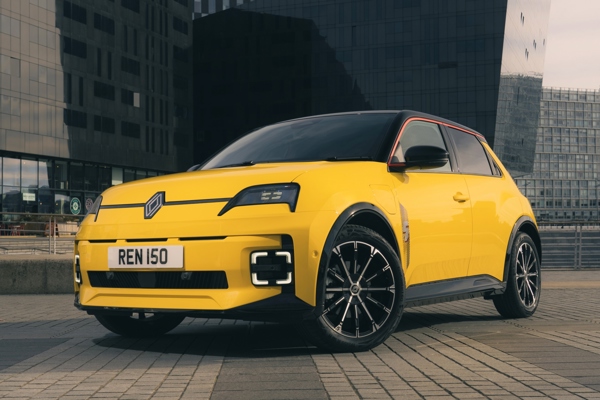
1. Renault 5 E-Tech: best electric car you can buy

Why buy it
- Big driving range for a small EV and it's also fun
Why avoid it
- Space in the back seats is limited
Not since the 2001 MINI has a company reinvented a classic car and got it so spot on. Renault has pulled the original Renault 5 into the electric age with a small car that looks totally modern, while paying tasteful homage to the original. It backs the looks up with brilliant fundamentals, too. Great battery range (up to 250 miles), excellent interior quality, easy-to-use infotainment and genuine fun to drive.
It’s not very practical and like a MINI, you can quickly make it expensive by moving up the range and adding a few options. Still, this is probably the best small electric car you can buy today. 2025’s European Car of the Year, no less.
Renault 5 E-Tech Real EV Range
We found that the larger-batteried Renault 5 E-Tech was capable of covering 200 miles despite more than half of that being at motorway speeds.
Read our Renault 5 E-Tech review.
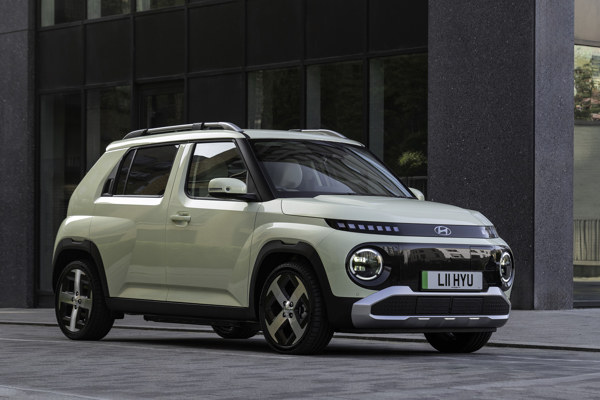
2. Hyundai Inster: best EV for maximising cabin space
Why buy it
- Most flexible interior of any small car and high-quality, too
Why avoid it
- Cheapest versions miss out on the most practical touches
Pound-for-pound, the Hyundai Inster is probably the best electric car on sale today. Extremely clever packaging makes it one of the most flexible small cars on sale, but it also has that rarest of qualities: personality. The modular seating can be folded completely flat, making the interior a ‘bed’. The split rear bench slides forward and backwards, the boot is decent and it has vehicle-to-load tech so you can plug your air fryer into it. It’s vexing that the clever rear seats aren’t available in the base model, though.
Two drivetrain choices mean the cheapest one has lower range, but there’s not that much between them really. The ‘short range’ version has a claimed 203 miles and the long one 230 miles. Either way, it’s a great small car that’s lovely to drive and to live with.
Hyundai Inster Real EV Range
If you're primarily going to be urban driving, the Hyundai Inster should reward you with over 250 miles of range with the Long Range battery pack.
Read our Hyundai Inster review.
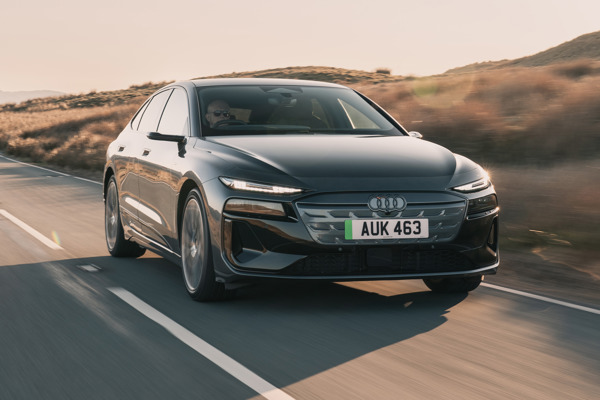
3. Audi A6 e-tron: best electric car for long-distance drives
Why buy it
- Stunning, high-quality interior with exceptional long-distance comfort
Why avoid it
- Expensive to buy, rear space could have been better
One of the most refined hatchbacks ever made, the Audi A6 e-tron is a lovely combination of luxury car refinement and family practicality. And it doesn’t matter whether you get the Sportback or the A6 e-tron Avant. The latter (an estate) has a bigger boot and slightly more rear headroom, but even the Sportback has more cargo space and flexibility than you’ll probably ever need.
Both battery options offer huge range (a claimed 346 from the one with the ‘small’ battery), charging is rapid, the ride quality is floaty and the electric motor means it’s quieter than Emily Blunt in that film about aliens with superhearing. The cabin doesn’t feel as special as the Mercedes EQE's though.
Audi A6 e-tron Real EV Range
When we tested the Audi A6 e-tron, we found the the difference between the 75.8kWh battery and the 94.9kWh alternative was nearer 50 miles of real-world range than the 80 miles claimed by the official figures.
Read our Audi A6 e-tron review.
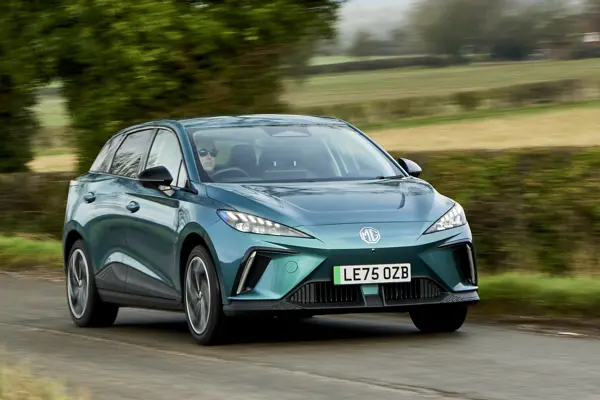
4. MG 4 EV: best electric car for value for money
Why buy it
- Impressively good value plus a seven-year warranty
Why avoid it
- Pre-facelift versions' cabin quality was lacking
The MG 4 EV feels strangely familiar for a car released just three years ago. It’s probably because you see so many of them around. It’s quite difficult to fault. Stylish, spacious and most of all, well-priced, it undercuts a lot EVs that are far less practical – the Vauxhall Corsa Electric, Peugeot E-208 and MINI Cooper Electric all cost significantly more than the MG.
The interior quality wasn’t the best on the market – that’s clearly where savings have been made – although matters improved significantly with its 2025 facelift. You’ll have to pay £37k for one with a range exceeding 300 miles, but choose wisely and it’s hard to ignore. The MG 4 EV XPower version is insane with a 0-62mph time of 3.8 seconds. The chassis can’t really cope, but that’s part of the charm.
MG 4 EV Real EV Range
We reckon the MG 4 EV Long Range is the one to go for given its official 50-mile advantage over the Extended Range battery will be far less in real-world driving.
Read our MG 4 EV review.
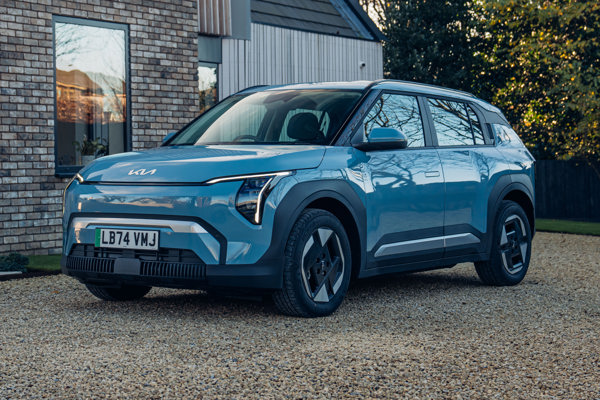
5. Kia EV3: best electric car for growing families
Why buy it
- Excellent cabin quality and impressive driving range
Why avoid it
- Not as interesting to drive as it is to look at
The 2025 World Car of the Year and UK Car of the Year, if you read our review of the Kia EV3 you’ll see 5/5 scores for every category. It looks unlike anything else - have you ever seen a mid-level, mid-sized, mid-market SUV that looks so… well, not mid? The interior is outstanding, brilliant ergonomically, intuitive to use and with touches like fabric trim cleverly masking the fact that it’s a £35k car and not a £55k one.
The 270-mile range of the base ‘Air’ model should be enough for most and it’s well-equipped to. Which is good, because the Kia EV3 does start to look expensive further up the range.
Kia EV3 Real EV Range
What can you expect from the Kia EV3 in the real-world? We reckon 200-220 miles is on with the smaller 58.3kWh battery while the 81.4kWh alternative should be good for 310-330 miles.
Reas our Kia EV3 review.
You may also like
- Looking to reduce your charging costs? Here's your guide to EV-friendly domestic tariffs
- Will 2028's pay-per-mile EV tax affect you? Everything you need to know about eVED
- Not quite ready for the EV switch? These are the 10 best self-charging hybrids on sale
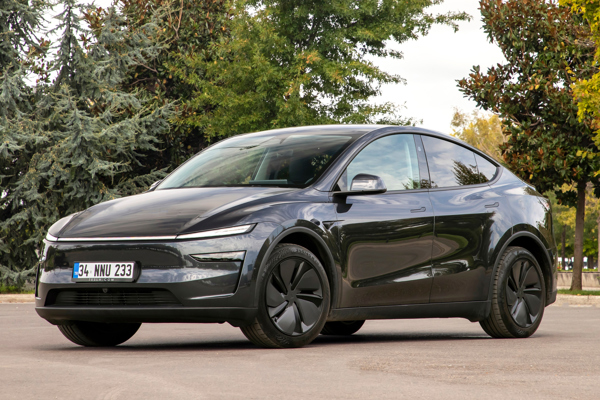
6. Tesla Model Y: best electric car for public charging ease
Why buy it
- Very practical with technology that's intuitive and fun
Why avoid it
- Interior quality lags behind similarly priced rivals
The Tesla Model Y is the result of Tesla basically making an SUV out of the Tesla Model 3, its best-selling car. In doing so, Tesla solved the Tesla 3’s main problem: boot space. It was the laziest piece of car design ever, essentially a Tesla Model 3 stretched upwards by 20% in Photoshop. But that didn’t matter, because it added a hatchback, an 854-litre cargo space (compared to 460 litres in the Kia EV3, for context) plus the tall, SUV-ish driving position that people seem to love these days.
Add to that the usual Tesla advantages, mainly super cheap lease deals and access to the UK’s best public rapid charging facility – the Supercharger Network – and it’s easy to see why there are so many Tesla Model Ys kicking about.
Tesla Model Y Real EV Range
For the best real-world driving range potential, go for the Tesla Model Y Long Range – 300 miles is your realistic level, with the ease of using Supercharger facilities for further journeys.
Read our Tesla Model Y review.
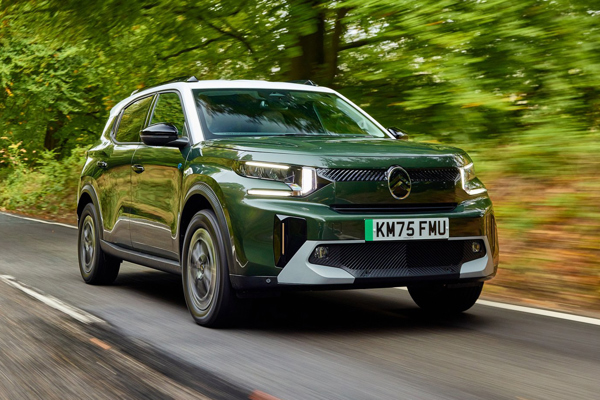
7. Citroen e-C3 Aircross: best electric car for comfort
Why buy it
- One of the best-riding cars on sale at any price
Why avoid it
- Clunky infotainment system feels like it's from 2016
There’s a strong argument for the Citroen e-C3 Aircross being the best value electric car in the UK. It’s not the cheapest - that’s the Dacia Spring, although that’s got all the sophistication of that time Boris Johnson was pushed down a zip wire with a Union Jack in each hand. But for less than £22,000 (after the Electric Car Grant), the Citroen e-C3 Aircross offers proper space for five (despite a small footprint) and a genuinely comfy driving experience.
Battery range isn’t the best (188 miles claimed in the Standard Range 44kWh battery version, which means about 150 miles on average), the square steering wheel is a bit odd and the infotainment takes some getting used to. But it is really well equipped as standard, so you don’t need to spend any more than a base car.
Citroen e-C3 Aircross Real EV Range
Choose the Citroen e-C3 Aircross Extended Range for an official driving range of 249 miles. In colder months we think that will average down to about 190 miles and potentially 210-220 miles when it's warmer.
Read our Citroen e-C3 Aircross review.
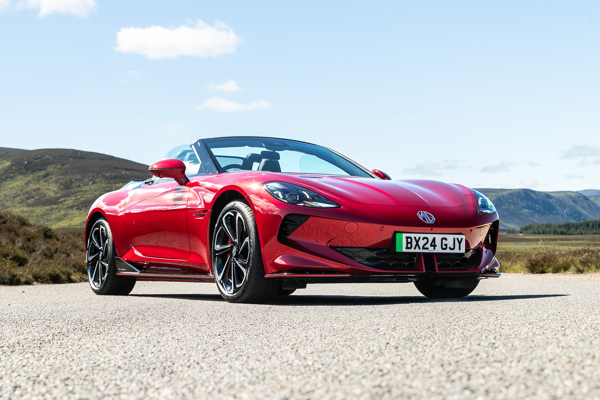
8. MG Cyberster: best electric car for sports car thrills
Why buy it
- The first (and so far only) proper sportscar that’s electric
Why avoid it
- Not quite as much fun as we had hoped it would be
There are plenty of high-performance EVs around, but there’s nothing quite like the MG Cyberster – a proper two-seat, impractical, rear-wheel drive sportscar with a soft top. And which also happens to be battery powered. The scissor doors are the sort of unnecessary theatre that you want from a £60k-odd convertible, too.
That’s the good stuff – and it’s enough to make the Cyberster easy to recommend. But to be honest, it could be a bit better to drive – it’s about half a tonne heavier than a Porsche 718 Boxster, which doesn’t help dynamically. And while cabin quality is good, the dashboard layout is quite confusing.
MG Cyberster Real EV Range
The cheaper, single-motor MG Cyberster has the longest range, but regularly wring the performance out of it and 200 miles is likely to be nearer the range you can achieve than its 316-mile official claim.
Read our MG Cyberster review.
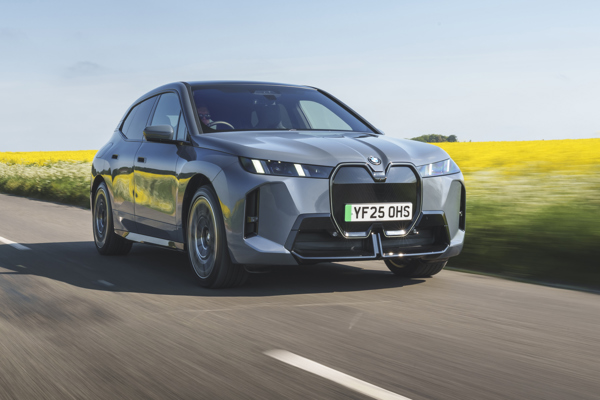
9. BMW iX: best electric car for bougie swankiness
Why buy it
- Stunningly beautiful, yet practical interior
Why avoid it
- Doesn't drive as sportily as other BMW SUVs
Unveiled in 2020 as The Best EV BMW Could Possibly Do (and only BMW’s second full EV following the brilliant BMW i3), the BMW iX still feels every bit as special in 2025. Facelifted recently, its best feature is an interior that’s supposed to evoke a high-end apartment. We’re not sure if it actually does, but regardless, it’s one of the best car cabins ever made. Its quilted leather, crystal switchgear and ‘floating’ panoramic screens with boujee backlighting are all pretty special.
Underneath all that, though, it’s basically a very easy electric car to live with. Its interior is vast and both battery options offer proper long-distance: the 95kWh model has a 374-mile claimed range, and the 109kWh 435 miles. It’s very expensive though, going well into six figures for the most powerful M70 model.
BMW iX Real EV Range
Unless you're wringing the neck of your BMW iX at every opportunity, in the real-world you will struggle to pull its potential driving range below 300 miles on a full charge.
Read our BMW iX review.
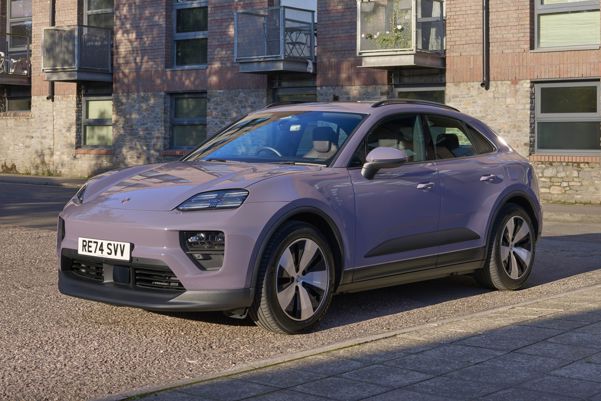
10. Porsche Macan Electric: best EV for driver satisfaction
Why buy it
- Best-handling electric SUV still feels like a proper Porsche
Why avoid it
- Not the roomiest in the back and the options are eye-wateringly expensive
The SUV is overwhelmingly the most common shape for an electric car and if you want the one that’s the most fun to drive, you’ve found it. You’d expect nothing less from Porsche, right? Every Porsche Macan Electric is quick – even the ‘basic’ rear-wheel drive version – but the Porsche Macan Electric Turbo model is blistering, getting to 62mph in 3.3 seconds.
Space is a bit tight in the back and generally, if it’s luxury and comfort you’re after, you’re better off with a BMW iX or a Volvo EX90. But the Porsche Macan Electric does feel very refined generally and it’s actually quite well equipped as standard. It’s easy to go mad with the options (it’s more than £700 to have a Porsche badge stitched into the headrests), but you don’t really have to.
Porsche Macan Electric Real EV Range
If you struggle to rein-in your enthusiasm then you may well see a sub-250-mile range from the Porsche Macan Electric – be sensible and most versions will see you go well pas 300 miles before you need to plug it in.
Read our Porsche Macan Electric review.
How we test cars: the electric car method
Testing cars to the nth degree is how we do things at Honest John. Our team's knowledge and expertise expertise has been fostered by getting to know cars of all prices and sizes to a deep level. To arrive at our list of the determine the 10 best electric cars for 2026, our editorial experts have:
-
Driven over 10,000 miles: Narrow city streets, broad urban thoroughfares, cross-country routes, motorways... You name it, we've driven electric cars on everything that British roads can offer – good and bad.
-
Prodded and parked: For us to tell you how cars will fit into your lives, we see how well the do or don't fit into ours, so there's plenty of folding the back seats over, installing Isofix child restraints, zipping up and down multi-storey car park ramps... You name it, we've done it. Yes, including seeing how much rubbish we can fit inside for a tip run.
-
Real EV Range: In order to understand how far electric cars can be driven in realistic conditions, that's exactly what we do. Plus we test what they're like to charge, both at home using wallboxes and out and about connected to the latest ultra-rapid DC facilities.
-
Owner Feedback: HJ readers share their experiences with us year-on-year revealing the best and the worst cars when it comes to their personal reliability experiences. And when we know which are the star performers and which are best left alone, we make sure that you do, too.
Our reviews are 100% independent. We don't take money from car manufacturers to influence our rankings. Our only priority is helping you find the right car.
Frequently asked questions about electric cars
What is the best all-round electric car to buy in 2026?
The Renault 5 E-Tech is our top pick for 2026. It successfully blends iconic retro styling with a modern 250-mile range and an engaging driving experience. For families needing more space, the Kia EV3 is the standout choice, having swept both the World Car of the Year and UK Car of the Year awards for its exceptional interior quality and value.
Which electric car has the longest real-world range?
While many EVs claim high figures, the Audi A6 e-tron and BMW iX are the current long-distance champions. The A6 e-tron offers a claimed range of up to 466 miles, while the BMW iX can realistically cover over 300 miles even in less-than-ideal conditions. For a more affordable long-range option, the Tesla Model Y Long Range remains a benchmark for efficiency and ease of charging.
Are electric cars actually cheaper to run than petrol cars?
Yes, provided you can charge at home. Using an EV-specific off-peak domestic tariff, you can fill a 60kWh battery for as little as £4.50 — roughly 2p to 3p per mile. In contrast, public rapid charging is significantly more expensive. However, with the 2026 VAT reduction on public charging (from 20% to 5%), the gap is narrowing, making EVs more cost-effective for those without driveways than in previous years.
Which electric car is best for towing?
The BMW iX and Tesla Model Y are among the most capable electric towers, with the iX rated for up to 2500kg. However, you should be aware that towing a heavy caravan or trailer can reduce an electric car's range by up to 50%. If you need a smaller car with towing capability, the MINI Countryman S ALL4 is a surprising performer, rated to tow up to 2000kg.
How long do electric car batteries actually last?
Most manufacturers provide an eight-year or 100,000-mile warranty on the battery, guaranteeing at least 70-80% of its original capacity. Real-world data from older models like the BMW i3 and Tesla Model S shows that battery degradation is much slower than initially feared, with many high-mileage cars still retaining the vast majority of their range after a decade of use.
Which electric car has the best charging network?
Tesla still holds a significant advantage thanks to its Supercharger network, which is widely regarded as the most reliable and easy-to-use rapid charging facility in the UK. While many Superchargers are now open to non-Tesla drivers, owning a Tesla Model Y or Model 3 offers the most seamless plug and charge experience without the need for multiple apps or RFID cards.
Is it worth waiting for an 800V electric car?
Cars with 800-volt architecture, such as the Kia EV6, Hyundai Ioniq 5 and the new Porsche Macan Electric, can charge significantly faster than standard 400V cars. If you frequently do long motorway trips and use ultra-rapid 350kW chargers, an 800V car can top up from 10% to 80% in under 18 minutes, saving you considerable time compared to older EV technology.
How much does it cost to charge an electric car?
The cost to charge an EV varies significantly depending on where you charge, and even what time you do it. By far the most expensive way is using rapid public changing, where the unit cost can be anything from 40p-90p/kWh.
We do expect those prices to fall considerably following the announcement that recharging using facilities is going to have a VAT reduction from 20% to 5% to fall in line with domestic electricity taxation. Conversely, charging at home can start from as little as 7.5p/kWh using an off-peak tariff. So to give a simple example, that means that a 50kWh battery could cost anywhere from £4 (50 x 8p) to £45 (50 x 90p) to charge.
How long does it take to charge an electric car?
Again, looking at a battery that holds 50kWh of charge, it would take roughly 24 hours to fill up using a domestic there-pin socket. We don’t recommend doing this. A dedicated home wallbox, which charges at 7kW speed, is the best way to charge your EV at home.
Using a wall box, a 50kWh battery will take around 7 hours. Fast public AC chargers, which run at 11–22kW, need two- to five hours, while a rapid DC chargers (50kW and above, and the most expensive) could take as little as 20 minutes.
It’s never quite that simple, of course - factors like temperature and battery management software, which slows down charge at the 80% mark to protect the cells, affect speed. But generally speaking, the best balance of cost-effectiveness and decent charging speed is to use a home wall box.
How far can an electric car go on a single charge?
Battery range is determined mainly by the size of the battery, in the same way that strapping a hugel fuel tank to a petrol car would make it go further. However, like a fuel car, some electric cars are more efficient than others.
So battery range is also determined by factors like the car’s weight, your driving style, the speed you’re doing, and temperature; a warm battery will give you more miles than a cold one. Broadly though, an EV should be capable of about 3 miles/kWh, meaning that a 50kWh battery will get you around 150 miles of range in a mix of urban and motorway driving.
