
10 best self-charging hybrids 2026: Expert verdict & Real MPG data

| Written by: Keith WR Jones | Last updated: 27th February 2026 |
Hybrid cars combine a combustion engine — usually petrol-fuelled — with one or more electric motors to boost performance and fuel efficiency. This rundown of our 10 favourites focuses on self-charging hybrids, which are also known as 'full' hybrids and hybrid electric vehicles, or HEVs for short.
Top picks at a glance
- Best overall: Toyota Yaris Cross
- Best for space efficiency: Honda Jazz
- Best for big families: Hyundai Santa Fe
- Best for sportiness: Honda Civic
- Best for value: Dacia Bigster
- See the full top 10
Unlike plug-in hybrid vehicles (PHEVs), it's not possible to recharge the battery pack by plugging in to a wallbox — instead, the engine generates electricity to store in the battery as you drive, hence the self-charging aspect of the name. Full hybrids also tend to have smaller batteries than PHEVs, so they can only be driven in electric-only mode for short distances.
Nonetheless, the latest self-charging hybrids do spend a significant amount of time in electric mode, especially when driving in towns and cities. Not only does this conserve fuel, you'll also enjoy the refinement of near-silent running when the engine is switched off.
- Find out how we test self-charging hybrid cars at HonestJohn.co.uk
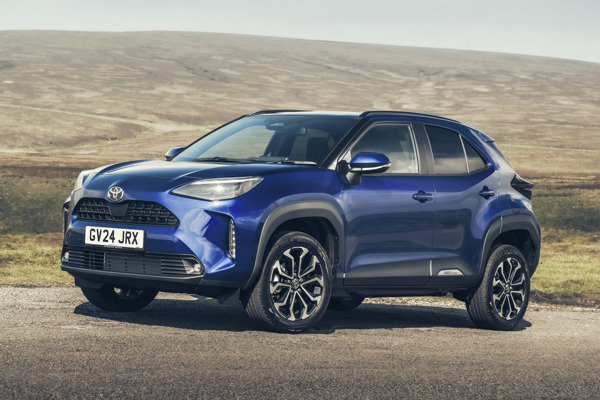
1. Toyota Yaris Cross: best hybrid for all-round excellence
Why buy it
- Turning the Yaris into an SUV has transformed it into a family car... almost
Why avoid it
- It has all the personality of a pair of Sketchers slip-ons
There's no real mystery to the Yaris Cross: Toyota has taken the Yaris, raised it and given it a chunkier body. Voila! The result is actual rear space for adults (for the first time in a Yaris) and a boot that will hold more than the weekly food shop (for the first time in a Yaris). The 400-litre cargo space is more than a third bigger than the non-Cross Yaris's. It's bigger than the Volkswagen Golf's, in fact.
And all this from a car with the footprint of a shoebox, which means it's proper easy to park. And it's relatively light, which helps with fuel efficiency. The hybrid system helps too, of course. There are two of them to choose from, albeit there’s only a few horsepower between them (116PS and 130PS) and they basically return the same fuel economy figure. You wonder why Toyota bothered.
No matter, because either way you're looking at one of the most sensible, easy-to-justify cars on the planet. The cabin has all the feeling of solidity we've come to expect from Toyota — it'll probably never break - and although we'd like the ride to be a little softer, it's generally very comfy and surprisingly fun to steer.
Real MPG v Official MPG
The Yaris Cross performs really well for owners, with our Real MPG figures showing a devilishly good average of 66.6mpg — exceeding the WLTP claim. Yet more proof of just how sensible this car is.
Read our full Toyota Yaris Cross review
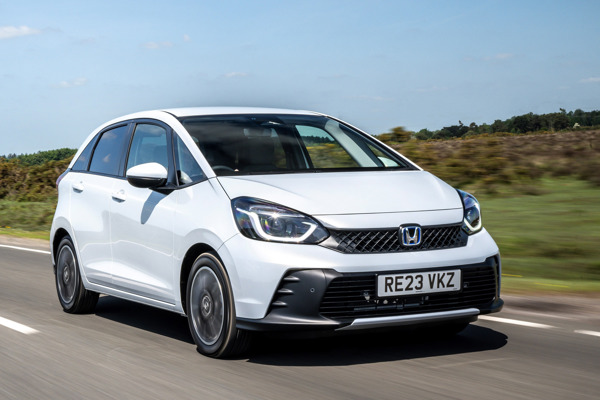
2. Honda Jazz: best hybrid for clever use of cabin space
Why buy it
- Tardis-like interior is also super-practical
Why avoid it
- If projecting a youthful image is important, look elsewhere
We love the Honda Jazz — it's mint. There's none of this 'it must be an SUV' to its tall-yet-short body that makes it easy to park. It's MPV-shaped if anything, but Honda will sell you the more rugged-looking Jazz Crosstar if you insist on an SUV vibe.
The Jazz's party trick is its voluminous interior with rear legroom that shames many a limo. When carrying cargo's more important, we reckon the Honda's rear Magic Seats are genius. They can fold upwards, standing vertically as a boot separator - we found them ideal for ferrying dogs in front and luggage behind.
Infamously, the Honda Jazz has oldest customer demographic of cars sold in the UK for many years. We don’t think you should care about that, unless, perhaps you're a Cliff Richard tribute act and need to preserve your youthfulness.
Under the Honda's short bonnet is an ingenious hybrid system comprising two electric motors, no traditional gearbox and a 1.5-litre engine that mainly operates as a generator. It sounds complicated yet we'd say the Jazz is one of the easiest cars to drive. It's really smooth, but fun? Try the Toyota Yaris if that's more your thing.
Real MPG v Official MPG
This generation of Honda Jazz is still too new for Honest John readers to have pooled a sufficiently reliable data sample to confirm its Real MPG credentials. In our tests, we found it can achieve 60mpg without any effort to drive economically — considering the best official figure is 62.8mpg, that's very promising.
Read our full Honda Jazz review.
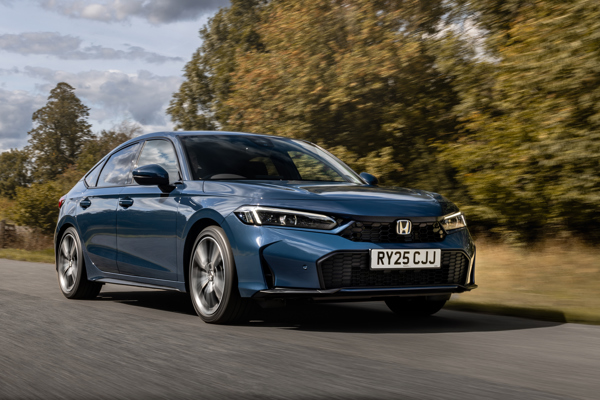
3. Honda Civic: best hybrid car for enthusiastic driving
Why buy it
- Proof that efficient family hatchbacks can be fun
Why avoid it
- Prepare to dig deep as it's on the pricey side
The Honda Civic is a completely different proposition from the smaller Honda Jazz. Okay, it’s a hybrid and it's very practical, but there the similarities end. Apart from the big H on the front grille, obviously. And the fact it's really economical. Plus that they both use the same kind of refined hybrid setup... Erm. Alright, alright, we rate the Civic because it's like a larger Jazz and more.
So what's the 'more'? Although the now off-sale, non-hybrid Honda Civic Type R was one of the all-time hot hatchback greats, being so lauded because the regular Civic is a car we know will also win over driving enthusiasts — the whole thing is tuned more for enjoyment than for pottering about.
It's also stacked with standard equipment, which is just as well because the Civic ain't cheap. Prices for the Honda start at around £34k, which buys you a mid-range Toyota Corolla or even an entry-level BMW 1 Series.
Real MPG v Official MPG
Our reader-generated fuel consumption data isn't yet rich enough to quote reliable Real MPG figures for the Mk10 Honda Civic, yet in testing we found it manages a Jazz-like 60mpg despite having a third more power. That's surperb compared with Honda's highest official claim is 60.1mpg.
Read our full Honda Civic review.
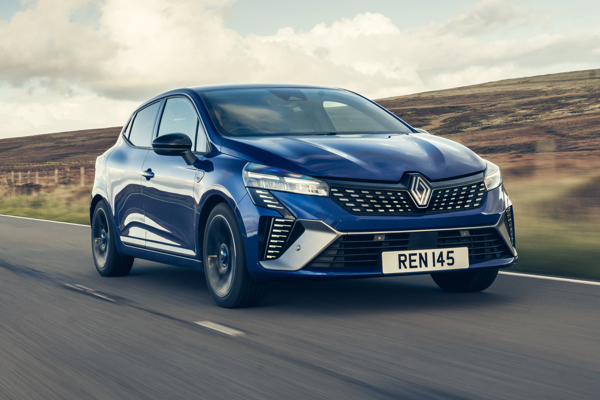
4. Renault Clio: best hybrid for small hatchback excellence
Why buy it
- Superb small hatch made more appealing with hybrid tech
Why avoid it
- As lovely as the interior is, rear-seat space is limited
Using know-how developed from Formula 1 racing, the Renault Clio's Full Hybrid E-Tech set-up is actually very similar to the Honda Jazz's. Maybe stick to the F1 link when showing off to your pals, eh?
The system uses two electric motors, allowing the 1.6-litre engine to freely cut in and out whenever the Clio’s electronics deem it best. Renault says this extends the 'engine-off' potential — we found it adds immediacy and responsiveness when pulling away or overtaking, which is very welcome.
Other than that, it's the same Renault Clio we know and love — a fabulous little hatchback boasting an upmarket interior, engaging handling with brilliantly communicative steering, but we found rear seat space tight. If you're going to have adults sat in the back regularly, we'd suggest the Jazz is a better option.
Despite not going on sale in the UK until 2027, the next Renault Clio has already been revealed — we reckon there'll be some bargains to be had for this outgoing car during 2026, so grab your haggling hat.
Real MPG v Official MPG
Is the official best of 65.7mpg for the Renault Clio Full Hybrid E-Tech achievable away from lab conditions? According to our reader-supplied Real MPG data, 59.9mpg is the collective average, representing an impressive 93% of the manufacturer's quote.
Read our full Renault Clio review.
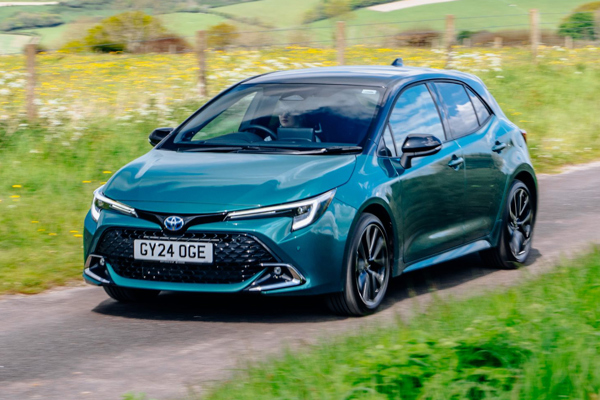
5. Toyota Corolla: best hybrid car for a stress-free life
Why buy it
- Effortlessly easy to drive yet surprisingly good fun, too
Why avoid it
- You'll quickly tire of friends asking how the minicabbing's going
Two hybrid options are available for the Toyota Corolla and while the 2.0-litre version is noticeably more rapid, we reckon the 1.8-litre alternative hits the sweetest spot for being cheaper to buy and run, without sacrificing much performance.
While we still rate the Honda Civic's ability to sate keener drivers higher, the Toyota's nevertheless an engaging drive — that's true in both hatchback and Corolla Touring Sports estate guises.
Without doubt, the Corolla's joker is its excellent reliability record, which Honest John readers most recently rated at an impressive 9.7 out of 10. Few cars at any price will give you less hassle than the Toyota, which is one reason they're so popular with minicab drivers — just bite your tongue and smile when everyone you know asks how you find the time to moonlight as a taxi driver.
Real MPG v Official MPG
According to the official tests, the 1.8-litre Toyota Corolla is capable of averaging a high of 64.1mpg. How do Honest John readers get on with theirs? A fine average of 56.6mpg represents 91% of that in our Real MPG statistics for the hatchback version, yet even better's possible with the Corolla Touring Sports — the Real MPG of 58.4mpg is a mega 97% of Toyota's published claim.
Read our full Toyota Corolla review.
You may also like
- Struggling to tell your Aion from your Jaecoo? Our A-Z of Chinese car brands explains all
- Will 2028's pay-per-mile tax affect hybrid cars? Everything you need to know about eVED
- Planning on making the switch to electric? Here's your guide to buying an EV in 2026
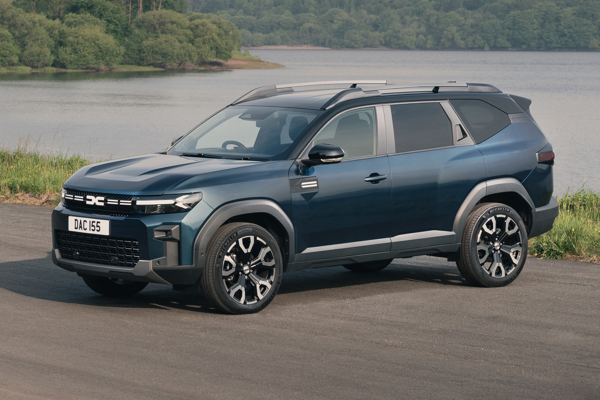
6. Dacia Bigster: best hybrid car for value for money
Why buy it
- Best interior space-to-price ratio of any hybrid
Why avoid it
- Disappointing three-star Euro NCAP safety rating
Remember when Dacia launched the first Sandero and it cost £5995? So do we, which makes the existence of the Dacia Bigster seem slightly surreal. Just 13 years on from the Sandero's arrival, the same brand's selling a hybrid-powered, family-sized SUV for £28k and more.
But while the Bigster's not cheap, we say it's great value, serving up an enormous amount of car for the money. Remember, the cheapest hybrid-powered Kia Sportage is comfortably north of £34,000, has less interior space front and rear, plus its boot is smaller — 25 litres short of the Bigster with the seats up and 136 litres less capacious when they're folded.
So, what's the Dacia's catch? Given most SUVs of this size easily score five-star Euro NCAP ratings, the Bigster's three-star score is lacklustre to say the least. Structurally it's fine, but its minimal driver assistance systems limit its potential and go a long way to explaining the price differential.
Real MPG v Official MPG
Still too new for our auidence-generated fuel consumption statistics, according to its official figures the Dacia Bigster Hybrid 155 can manage a best of 57.6mpg.
Read our full Dacia Bigster review.
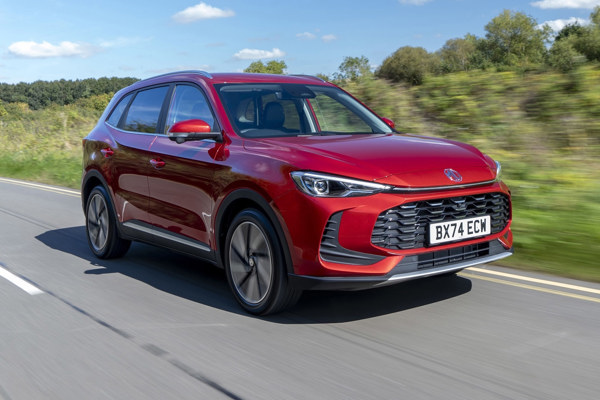
7. MG ZS: best hybrid car for performance on a budget
Why buy it
- Impressively smooth and eager hybrid performance
Why avoid it
- It's no sports car, so it doesn't need to ride this firmly
While its growing assortment of affordable EVs grab more of the headlines, it would be wrong to ignore the MG ZS Hybrid+. We think it's strong value for an SUV of this size, significantly undercutting rivals such as the Kia Niro and Nissan Qashqai, if not the gargantuan Dacia Bigster.
MG's Hybrid+ system is another where the engine defaults to acting as an on-board electricity generator most of the time. We found it makes lower-speed urban driving especially smooth and immediate in nature — we appreciate that the burden of stop-start-stop traffic has been eased. Typically, the engine only joins in powering the wheels when harder acceleration's called for.
While the MG brand's origins are steeped in sports car nostagia, in the days when a flat cap, driving gloves and a pipe were your in-car accessories, the ZS Hybrid+ is patently not a pert two-seater convertible. Sure, it packs an impressive 196PS punch and we found it to be brisk for a medium-sized SUV, but given its role is likely to be family transport-based rather than a deliverer of thrills, we think MG would be well-advised to make it ride much more comfortably.
Real MPG v Official MPG
We're not yet able to share our readers' Real MPG fuel efficiency experiences, but according to the official numbers, the MG ZS Hybrid+ is capable of returning 55.4mpg.
Read our full MG ZS review.
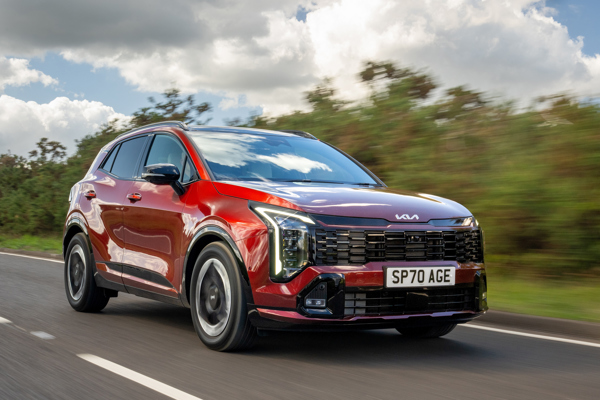
8. Kia Sportage: best hybrid car for being part of the family
Why buy it
- All the car most families are likely to need
Why avoid it
- Its popularity means it's not an individualist choice
The Kia Sportage is one of those cars that does what Volkswagens used to do brilliantly and what Skoda still does. We like that it's not overly showy as it goes about being low-key superb at everything.
Comfy and spacious for people and belongings, it's such a fab family car and it seems the nation agrees — the Sportage has been the second-best-selling car behind the smaller Ford Puma for the past couple of years. Given there are so many Sportages on the road, it's not a car to choose if you like standing out from the crowd.
The self-charging hybrid model is our pick of the Sportage range, with ample power and a quick-shifting automatic gearbox, it’s surprisingly quick when you need to accelerate but easy-going the rest of the time.
Real MPG v Official MPG
When tested for its official fuel consumption figures, the Kia Sportage Hybrid manages a best average of 50.4mpg. While the facelifted Sportage is too new to have pooled a sufficient quantity of Real MPG data from our readers, the pre-makeover version was achieving a mighty impressive 99% of its claimed fuel efficiency figure.
Read our full Kia Sportage review.
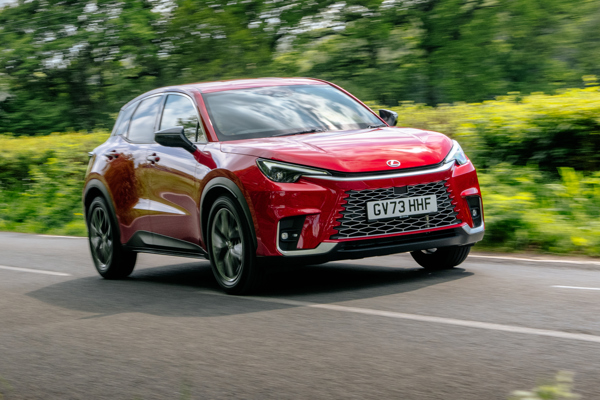
9. Lexus LBX: best hybrid car for heightened bougie-ness
Why buy it
- A properly posh, feel-good small SUV
Why avoid it
- Similar driving experience with the cheaper Yaris Cross
You might argue that the Lexus LBX strays a little too close to 'posh Toyota' territory — it is very similar to the excellent Yaris Cross beneath its glizty bodywork, after all, so it's not dissimilar to drive. That misses the LBX's point, though — it has all quality and most of the refinement you’d expect of any Lexus, but squeezed into a package that’s highly manageable around town. We reckon it’s a brilliant little crossover.
Only available as a hybrid, the LBX is inexpensive to run, helped by the fact that it's not especially quick so you won't burn through fuel maximising performance. Still, the little Lexus is at its best when driven serenely — we rate it higher than any other small small SUV in this regard.
Its outstanding interior quality is the stuff of dreams compared with the Audi Q2 and Mercedes GLA — you'll want to run your hands across it everywhere. There's a baffling array of trim levels to pick between, all with confusing names with little sense of what the hierarchy is. The mid-range Premium Plus is the sweetest spot for its equipment-to-cost balance.
Real MPG v Official MPG
Based on its official fuel consumption tests, the Lexus LBX is capable of returning up to 62.8mpg — an impressive lack of thirst. As it's too new to have gathered a sufficient number of our readers' Real MPG figures, it remains to be seen how close to that amount is being achieved, but the mechanically similar Toyota Yaris Cross performs even better in the real-world at 102% of the manufacturer's quoted figure.
Read our full Lexus LBX review.
10. Hyundai Santa Fe: best hybrid 7-seater for big families
Why buy it
- Masses of space and practicality wrapped in a bold design
Why avoid it
- Those looks may prove to be too divisive for some
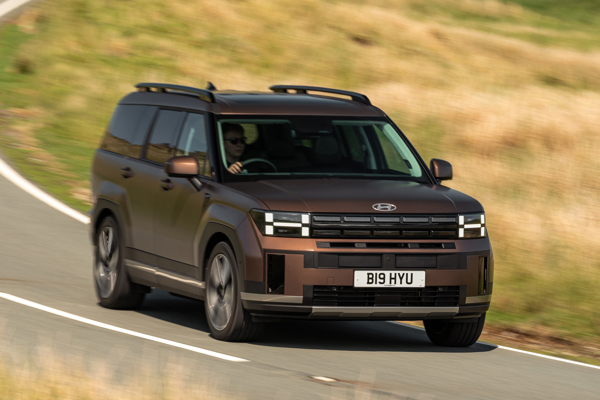
How much the Hyundai Santa Fe has been transformed in the space of 25 years. Its status has risen from a bargain basement Korean SUV to a large, luxurious family car that we say is better than the Land Rover Discovery in the way most car buyers will use it — on the road, basically. It’s unironically brilliant now and a perfectly acceptable choice for people who self-identify as 'middle class'. Rather like Aldi or Lidl. Or sweatpants.
It's unusual for a car's styling to be a decisive factor in whether or not buyers might consider it in the first place, but the Santa Fe's block-like design might well be such a model. There's no denying it's distinctive, but those ever-present straight lines won't win everyone over.
Seven seats as standard makes it a brilliantly flexible family wagon, with a huge boot when the rearmost seats aren’t in use. In standard self-charging hybrid form — there’s also a Santa Fe PHEV — it’s very economical for a car this size. The entry-level Premium specification has all the standard kit most people need, so there's no need to spend more — splash out on a memorable family holiday instead.
Real MPG v Official MPG
Officially, the Hyundai Santa Fe Hybrid will manage a best of 42.2mpg — we achieved a figure in the mid-30s on test, which is still decent for a car of this size. It's too new for enough meaningful Real MPG data from Honest John readers to know how it's performing in the hands of actual car buyers, though.
Read our full Hyundai Santa Fe review.
How we test cars: the self-charging hybrid method
At Honest John we know no other way to test cars than thoroughly. Our editorial team prides itself that its collective expertise is the result of poring over every aspect of how a car is likely to be used in the real world, not simply concerning ourself with what it's like to drive. We dig deep so that you can be sure you're experiencing cars as closely as you can without being there in person. To choose the 10 best self-charging hybrid cars for 2026, our expert editorial team has
-
Driven over 10,000 miles: from urban streets to dual-carriageways and motorways, with plenty of A- and B-roads in between, we test every car across the nation's highways. That's vital for hybrids, where being super-economical around town's easy, but easily unravelled at higher speeds.
-
Prodded and parked: We spend ages examining cars' practicality, whether it's the office commute, family day trips or braving flat-pack furniture emporia. That includes ensuring we understand what they're like to park-up, whether in a municipal multi-storey or on a narrow driveway.
-
Real MPG Data: Unlike other car review sites, we use our own road testing experiences along with thousands of reader-supplied figures from our unique Real MPG database. Official fuel economy figures are one thing, but owners' experiences are another altogether.
-
Owner Feedback: Owners' reliability scores from the Honest John Satisfaction Index are integral to our reviewing processes. It's important to us that each model's dependability isn't a secret because we know how important that is to you.
Our reviews are 100% independent. We don't take money from car manufacturers to influence our rankings. Our only priority is helping you find the right car.
Self-charging hybrid FAQs
What is a self-charging hybrid?
The term self-charging hybrid is slightly controversial because some people feel it’s a bit misleading. Electrical power is generated by the engine and stored in the battery while the car is driven along, hence it's said to charge itself. So as not to irk car buyers who dislike the phrase, manufacturers call their self-charging systems a variety of other names including plain and simple hybrid, full hybrid and hybrid electric vehicle (HEV) — they are all the same type of technology.
Do you have to plug in a hybrid car?
Not a self-charging hybrid, no — in fact, you can't even if you wanted to. The only hybrids you can plug in are — unsurprisingly — called plug-in hybrids, or PHEVs for ease. You don't actually need to plug a PHEV in, but doing so maximises their overall fuel efficiency.
PHEVs have larger batteries which means they can travel quite long distances and at relatively high speeds using electric power alone, with the best of them easily achieving over 50 miles of driving without the combustion engine being fired into life.
By comparison, self-charging hybrids have much smaller batteries, so while most of them are able to drive for a mile or two at low speeds using their electric motors alone, they mostly use their electric motors to assist the engine, improving performance and economy as a result.
Is a hybrid car an electric car?
No, but it's easy to wonder that with terminology like hybrid electric vehicle. Hybrids are 'electrified' cars, whereas electric cars have no combustion engine in them. Many self-charging hybrids have an EV driving mode, but the purpose of this is to maximise its limited electric-only running potential — think of it more as an Eco mode in a non-hybrid car, confined to stop-start urban driving. Go faster and the engine invariably kicks in immediately.
