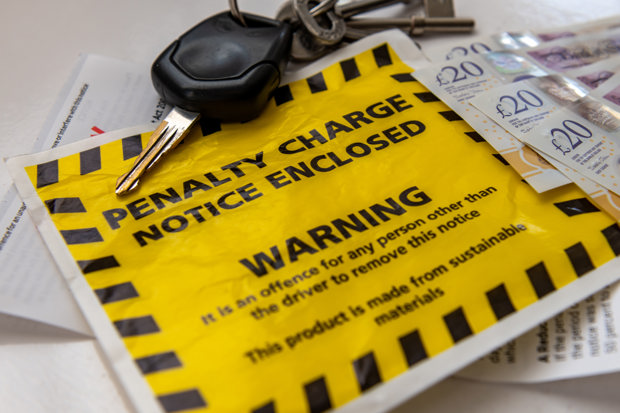
9. PARKING FINES. What are my rights regarding parking fines? And is a parking ticket void if I drive away before it has been served on me or the car?
Unfair Penalties
(With thanks to Alan Salsbury)
Ticketed car parking in a car park or on private land is a contract between the car driver and the owner of the land or the company managing paring on the land. If an unfair penalty for parking in an off road car park is imposed by a parking enforcement company due to a breach, often due to circumstances beyond the car owner's control, there is a remedy. (Thinking in particular of the driver who, having
purchased a train station parking ticket for two days, arrived back at the car 11 minutes late.)
The law covers this situation adequately with the Unfair Contract Terms Act 1977 which clearly provides under group 5 para 1(e) that "Terms may be unfair if they have the object or effect requiring any consumer who fails to fulfil his obligation to pay a disproportionate high sum in compensation". In other words, the company
owning or managing the parking space can only charge a penalty which accurately reflects the loss of income they suffered arising from that breach. Insofar as the driver arrived 11 minutes late the penalty, if any, should be the cost of an 11 minute ticket. If there were several other parking spaces available, then no loss was suffered.
"I have quoted this act several times to such organisations and in each case they have cancelled the ticket, albeit without prejudice to future decisions to avoid creating a precedent. It has worked every time. However, anybody thinking of using this law to avoid buying a ticket. beware. You have to purchase a ticket to establish a
contract."
If you have not paid to park and are clamped, there is no initial contract.
Latest street parking legislation:-
From Barrie Segal - founder of AppealNow.com™
The government has claimed that new parking regulations coming into force in England and Wales on 31st March 2008 are transparent and fairer for the motorist. Nothing could be further from the truth.
One example will suffice. Under current legislation, in order for a parking ticket to be valid it must be handed to the person believed to be the driver or put on the vehicle. If it is not, then it is not validly issued and is not enforceable. This was confirmed in the 2007 High Court case of R (on Application of Transport for London) v Parking Adjudicator (interested party Ademolake) (EWHC 1172 Admin)
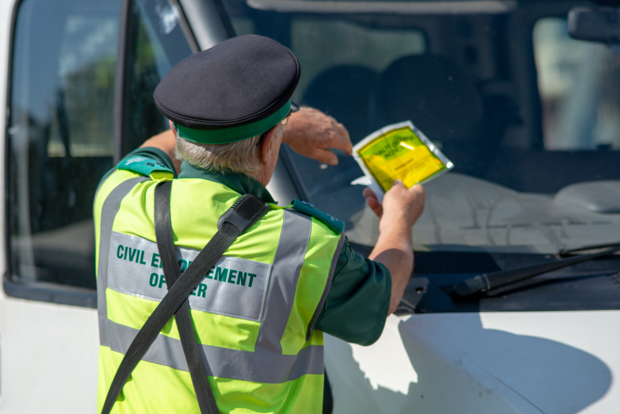
Under current law, a ticket issued by a parking attendant can only be sent by post if the parking attendant was physically prevented from putting the ticket on the vehicle or giving it to the driver. (From the 31st of March, as a result of some bright spark’s inspiration, parking attendants will be known as Civil Enforcement Officers—this is the only part of new parking laws which is likely to give the motorist a laugh.)
There are very good reasons for this rule. If someone gets a parking ticket they know exactly what they were doing at the time, and if for example they were letting off a passenger or loading goods, they can gather the evidence necessary to prove that. There are a lot of cases where drivers drive away before the ticket can be put on their vehicle either because they are unaware of the presence of the parking attendant or because they see the parking attendant lurking. In this situation the parking attendant is prevented from issuing a valid parking ticket so it has led to a massive fraud where the parking attendant claims that the ticket was put on the vehicle or handed to the driver when neither was the case. As a result, the first the motorist knows of the parking ticket is when they get a document called a Notice to Owner in the post, claiming they haven’t paid the parking ticket.
When I uncovered this scam nearly five years ago, I christened it the Ghost Ticket, and the name stuck. It is now used by parking attendants, local authorities and the press. There have been many cases heard by Parking Adjudicators which have demonstrated that parking attendants have fabricated evidence to claim that the tickets were correctly served. The latest wheeze is when challenged to show a photograph of the ticket on the vehicle, the parking attendants either claim they were physically assaulted and prevented from issuing the ticket or that the motorist tore up the ticket.
In the new legislation the government has sneakily inserted a provision that where a parking attendant has started to write a ticket and the motorist drives away, they can send the ticket by post. The opportunities for fraud are astonishing and in my view ‘legalize’ the issue of Ghost Tickets. The Transport Minister has claimed this is to do with safety, as it will stop motorists driving away to avoid receiving a ticket!
What is worse is that when a ticket is issued in these circumstances and are sent in the post, motorists will lose their current right to make an informal appeal against the parking ticket. If they appeal to the council and the council turns them down, their next appeal is to the Parking Adjudicator.
There are at least two major problems with this: How will the motorist know exactly what they were doing at the time the parking ticket was allegedly written up and if the motorist never receives the parking ticket because it is lost in the post or mis-addressed (or actually never sent!) the first they will hear of the parking ticket is when they receive a document called a Charge Certificate, increasing the original fine by 50% and threatening that unless payment is made the debt will be registered at Northampton County Court.
The glaring problem with this is that once a Charge Certificate is issued, the motorist can no longer appeal against the parking ticket. They will either have to persuade the council to cancel the Charge Certificate and re-issue the Penalty Charge Notice (the legal name for a parking ticket), or if they do not, then await the registration of the debt at the court and the issue of an Order for Recovery.
The only way then to stop bailiffs arriving at the front door is for a witness statement to be sent to the court stating that the original Penalty Charge Notice was not received and requiring the court to cancel the registration of the debt and requiring the local authority to go back to the parking ticket stage. There are strict time limits to get this witness statement in to the court, and if the motorist fails to do so they can expect bailiffs at their door. Given the high percentage of mail that is lost in the post, it is likely that Orders for Recovery will rocket, bailiffs’ visits will increase, more vehicles will be impounded and general chaos will reign.
If this isn’t bad enough, the new legislation will mean that all parking tickets or other tickets issued on the basis of CCTV camera evidence will be subject to the same new procedure. (Currently all but one type of CCTV-issued tickets are subject to the three-stage appeal process: 1- the informal appeal to the council, 2- the formal appeal to the council, and 3- the final appeal to the Parking Adjudicator.) Moreover, as local authorities outside London start to issue CCTV tickets, this will have a further knock-on effect with corresponding Orders for Recovery and bailiffs’ visits.
The new Parking laws came into force by virtue of the Traffic Management Act 2004. Under this legislation the existing parking legislation, The Road Traffic Act 1991 legislation is repealed. The parking rules are now to be set out in statutory instruments by the Lord Chancellor.
Four Statutory Instruments were passed just before the 2007 Christmas recess on 10th December 2007. As these Statutory Instruments are “delegated legislation “ they were debated and approved in Committee rather than by the full Parliament.
The statutory Instruments are as follows:
Civil Enforcement of Parking Contraventions (England) General Regulations 2007
Civil Enforcement of Parking Contraventions(Approved Devices)(England)Order 2007
Civil Enforcement of Parking Contraventions (England) Representations and Appeals Regulations 2007.
The Removal and Disposal of Vehicles (Amendment) (England) Regulations 2007
Note that London authorities have been able to issue camera tickets under the London Local Authorities Act 2000 so Camden were entitled to use CCTV to issue the ticket but clearly issued it unfairly.
Since 31st March 2008 other council in England and Wales have the right to issue CCTV tickets for parking and other contraventions if they apply to and re authorised by the Department for Transport.
Barrie Segal is the founder of www.AppealNow.com, a website which helps motorists fight unfair parking tickets.
Barrie is the author of “The Parking Ticket Awards: Crazy Councils, Meter Madness & Traffic Warden Hell” published by Portico.
Another parking ticket site
www.ticketfighter.co.uk
The rest of this section should be read in historical context
The 1689 Bill of Rights embodies your fundamental constitutional rights and cannot be repealed or amended in any way.
This website explains more:-
www.bwmaonline.com/Legal%20-%20New%20doubts%20-%20Thoburn%20conviction.htm
However, on 6th July 2006 in the Royal Courts of Justice, the Judge refused Robin de Crittenden oral application for Judicial Review, declaring that, "the Bill of Rights does not apply to parking as parking tickets are not fines or forfeitures."
Paul Smith (RIP), founder of the Safe Speed road safety campaign (www.safespeed.org.uk) said: "This is a perverse ruling apparently intended to preserve the status quo. It's not a judgment - it's a fudgement."
"It's a very bad day for justice, but a good day for the English language, which surely must gain the word 'fudgement'. Over 400 years of legal principles are being swept away and we are by far the poorer for it."
6.00 am Thursday 3rd August 2006
High Court Parking Ticket Victory for Motorists
AppealNow.com’s claim that Barnet and other council’s parking
tickets are invalid upheld by the High Court.
Barnet Council’s parking tickets were judged to be invalid in a landmark case decided in the High Courton 2nd August 2006.
Mr. Justice Jackson ruled that Barnet’s parking tickets were invalid as they did not have two dates on them, one a date of contravention and the other a date of issue.
In the case of Hugh Moses – v - Barnet, Barrie Segal the founder of www.AppealNow.com™, represented Mr. Moses at the Parking Adjudicator and challenged the validity of Barnet Council’s parking tickets on the grounds that they did not have a date of issue. Two separate Parking Adjudicators upheld Mr. Segal’s argument and agreed that Barnet Council’s parking tickets were invalid.
Barnet Council took the matter to the High Court and challenged the decisions.
The test case decision by Mr. Justice Jackson ruled that Barnet’s parking tickets were invalid as they did not have two dates on them, one a date of contravention and the other a date of issue. He also said that any parking ticket needs those two dates to be valid.
Barrie Segal of www.AppealNow.com says “Parking tickets have to comply with a strict legal requirement. Under the Road Traffic Act 1991 the date of issue, amongst other things, must be shown on the parking ticket. In the Barnet and other cases it was not.
I have previously told the Chief Parking Adjudicator in London, the National Parking Appeals Service and the Scottish Appeals Service that in the interests of justice all adjudicators must consider the validity of the parking ticket when the make their decision. The fact that Parking Adjudicators have not done this as a matter of course is unacceptable. Following this decision they will have no choice.
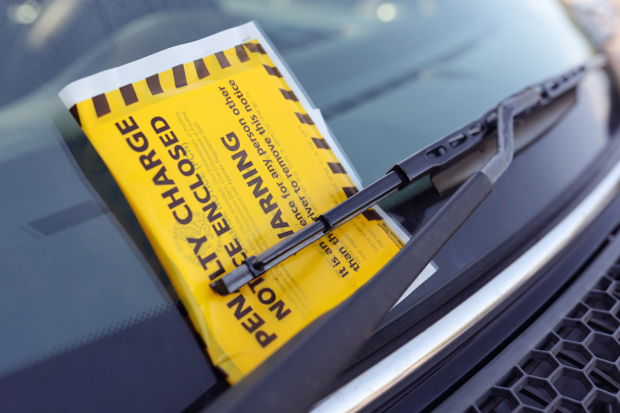
The Parking Tickets (technically called a Penalty Charge Notice or
PCN) do not comply with Section 66 of the Road Traffic Act
1991(“RTA 1991”)
Section 66 (3) states
(3) A penalty charge notice must state [my emphasis and underlining]—
(a) the grounds on which the parking attendant believes that a
penalty charge is payable with respect to the vehicle;
(b) the amount of the penalty charge which is payable;
(c) that the penalty charge must be paid before the end of the
period of 28 days beginning with the date of the notice;
(d) that if the penalty charge is paid before the end of the period
of 14 days beginning with the date of the notice, the amount of the
penalty charge will be reduced by the specified proportion;
(e) that, if the penalty charge is not paid before the end of the
28 day period, a notice to owner may be served by the London
authority on the person appearing to them to be the owner of the
vehicle;
(f) the address to which payment of the penalty charge must be sent.
More at www.AppealNow.com™,
If a parking ticket is not issued on the driver or the car before he/she drives away it is void. Tfl v/s Ademolake, High Court, 27-3-2007
This judgement by Mr Justice Calvert-Smith currently applies only to London where Traffic Wardens are employed by the Metropolitan Police, not local councils or 'enforcement agencies'. But it's an important confirmation of the letter of the law in the Road Traffic Act 1991 because of planned legislation to extend the system to conviction by CCTV and penalty notices sent by post.
Simeon Ademolake got the £50 penalty fine notice after parking in a bay but putting one wheel on double red lines in Commercial Road, East London, in June 2005. He disputed the notice, sent through the post, and won his case at the Parking and Traffic Appeals Service after explaining that he told the warden "I'm driving away now" and no ticket was ever given to him or placed on his windscreen.
Transport for London, appealed to the adjudicator but this was turned down so Tfl took the case to the High Court, where Mr Justice Calvert-Smith ruled that the two earlier decisions were correct.
The London Local Authorities Act 2000 states that if a warden tries to issue a ticket but is prevented by anyone from doing so, the authority may send a fixed penalty notice by post to the vehicle's owner.
The judge ruled that merely jotting down details about the car and driver, as the warden had done, did not amount to an "attempt" to issue a parking ticket.
Ian Rogers, counsel for the traffic adjudicators, told the judge at an earlier hearing that his judgment would have wide importance because a bill due to be introduced soon would allow local authorities outside London to issue fixed penalty notices by post.
However, not mentioned in court, is the fact that a London Traffic Warden may instruct a driver to stop and failing to do so is an offence in itself. An independently employed 'parking enforcement officer' has no such power.
The power is under S.163 RTA 1988 (Police power to stop vehicles) amended to include Traffic Warden, viz:
The Functions of Traffic Wardens (Amendment) Order 2002. This Order amends the Functions of Traffic Wardens Order 1970 in consequence of section 44 of the Police Reform Act 2002. Article 2 provides that references to a constable in sections 163 (power to stop vehicles) of the Road Traffic Act 1988 are to include references to a traffic warden.
Some case Law: Whilst in R v Waterfield [1964] there was no power to detain a stationary vehicle, a driver has a duty to keep the vehicle at a standstill whilst a constable has reasonable opportunity of exercising his powers and this may include telling the driver his suspicion that a vehicle is taken without the owners consent and arrest if necesssary. Lodwick v Sanders [1985]
This tends to suggest that power to stop includes initiating the due course of the law i.e. view docs, report for summons.
Solicitors specialising in defending alleged motoring offences:
www.motoroffence.co.uk
Department for Transport (National) Press Release 25-7-2007:
"Motorists to benefit from fairer parking enforcement"
New powers to make parking enforcement more motorist-friendly and consistent are being introduced, Transport Minister Rosie Winterton announced today.
Regulations, laid in Parliament today, will give independent adjudicators more power, including the right to ask local authorities to scrap fines for motorists who have mitigating circumstances.
Further regulations, to be laid later this year, will introduce a number of improvements including lower penalties for less serious offences.
New guidance also requires local authorities use parking enforcement to improve road safety and cut congestion, not make money.
Rosie Winterton said:
"It is vital that we increase public confidence in parking enforcement by making it fairer. These new rules will make the system more transparent and consistent.
"There is a perception that motorists are often unfairly penalised by parking attendants who are only interested in issuing as many tickets as possible. We want to ensure the penalties they issue are fair and justified.
"At the same time it is important that motorists understand parking enforcement is crucial to ensuring traffic flows smoothly. Parking in the wrong place can and does cause traffic jams. It can also put other road users in danger."
The regulations will come into force next March to give local authorities time to prepare for the new system.
Notes for Editors
1. The regulations being laid in Parliament today have been introduced under the Traffic Management Act 2004.
2. For the purposes of this press release, 'fines' refers to Penalty Charge Notices (PCNs).
3. To improve consistency, for the first time local authorities outside London will be able to issue PCNs by post when camera evidence is available or when parking attendants are prevented from serving notices by violence or driving away. Authorities outside London will also be able to enforce dropped footways and double parking.
(This clause is to overrule a clause of the Road Traffic Act 1991, upheld by case law Tfl v/s Ademolake, High Court, 27-3-2007, that the ticket must be issued to the driver or the car directly for the fine to be legal.)
4. There will be more power for independent adjudicators. They will have the power to refer back to local authorities where a parking contravention has taken place but in mitigating circumstances. They can also consider cases where the authority has not followed correct procedures.
5. There will be an increased discount period for PCNs sent by post (21 days instead of 14 days).
6. There will be higher parking penalties for more serious contraventions and lower penalties for minor ones.
7. There will be quicker clamping and removal times for persistent evaders. Wheel clamping will otherwise be discouraged.
8. Statutory Guidance will be published which will make clear that the making and enforcing of parking regulations is done in a transparent, legal and comprehensive fashion. The emphasis is on information for road users. The guidance says that authorities shall publish their policies and reports; foster a more professional approach by providing training for everyone involved in parking enforcement; regularly review parking policies in consultation with stakeholders and communicate these policies effectively to the public. Authorities should make it clear performance and rewards/penalties should never be based on the number of PCNs, clampings or removals.
9. The Road Traffic Act 1991 began the system of Decriminalised Parking Enforcement (DPE). Under DPE parking offences are enforced by parking attendants employed by the relevant local authority rather than traffic wardens employed by police. This reflects the need for police to concentrate on core policing priorities.
10. Under the new proposals DPE becomes Civil Parking Enforcement (CPE). Parking Attendants become Civil Enforcement Officers (CEOs)
11. The Representation and Appeals Regulations laid today are affirmative regulations and therefore will be debated in Parliament. This will happen after the summer recess. Once they have been approved, they, and the other five statutory instruments that are subject to the negative Parliamentary procedure will be made and the Statutory Guidance will be published.
12. The draft regulations and draft Statutory Guidance will be sent to all local authorities and stakeholders once the affirmative regulations are laid.
13. The regulations will come into force on 31 March 2008 to give local authorities time to prepare for the new system.
14. The DfT will in early August consult on detailed Operational Guidance to local authorities.
15. The regulations and Statutory Guidance will only apply to local highway authorities in England. The Welsh Assembly Government is planning to lay similar regulations for Wales.
Public Enquiries: 020 7944 8300
Department for Transport Website: www.dft.gov.uk
The new Traffic Management Act became law in March 2008 and disgracefully enables enforcers to obtain convictions on CCTV evidence, using CCTV which is supposed to be for public safety rather than revenue raising.
Local authorities are ignoring the government's statutory guidance on the use of CCTV enforcement, assording to Barrie Segal of www.appealnow.com.
In The Secretary Of State's Statutory Guidance To Local Authorities On The Civil Enforcement Of Parking Contraventions it states "The Secretary of State recommends that approved devices are used only where enforcement is difficult or sensitive and CEO enforcement is not practical. Approved devices should not be used where permits or exemptions (such as resident permits or Blue Badges) not visible to the equipment may apply."
Councils ignore this statutory guidance because using parking attendants/civil enforcement officer to move along drivers who were in the process of parking where they shouldn't, or whose physical presence would remind drivers not to park where it is inappropriate, does not raise money. It would certainly keep traffic flowing which is the whole point of the legislation but it would not raise revenue. So they ignore
the advice and resort to CCTV to issue fines and fill their coffers.
LANDMARK PARKING TICKET VICTORY THROWS PARKING ENFORCEMENT INTO CHAOS. MILLIONS OF PARKING TICKETS ARE UNENFORCEABLE
From Barrie Segal - founder of AppealNow.com™ www.appealnow.com
8 pm Saturday 8th November 2008
In a landmark case at the London Parking Adjudicator, Barrie Segal, the founder of
www.appealnow.com, got the Controlled Parking Zone for the central zone of London’s West End declared illegal.
Barrie represented transport company, Keystone Distribution UK Ltd in a case against Westminster Council where he claimed that the Council’s massive F3 Controlled Parking Zone in the heart of the West End was illegal and that no parking tickets could be issued to motorists on single yellow lines in that zone. Barrie’s argument was that Zone F3 did not have the correct signs at each vehicle entry point and therefore the zone was illegal. After a site inspection the Parking Adjudicator agreed with Barrie.
The effect of the decision (Keystone Distribution UK Ltd –v - City of Westminster Case 2080274557), is that every single yellow line must have a time plate showing the parking restrictions along its length (The Department for Transport recommends every 30 metres). As hardly any single yellow lines in the area have these individual signs no parking ticket can be issued to vehicles parked or waiting there.
The F3 Zone is bordered by the whole of Oxford Street to the south, Edgware Road to the West, George Street /New Cavendish Street to the North and from Centre Point northwards to the East
In a statement Barrie said” This is a victory for motorists in their fight against over-zealous councils. This decision will affect motorists throughout the United Kingdom as I believe that hundreds if not thousand of Controlled Parking Zones are not properly marked as required by law. It is clear to me that millions of parking tickets have been issued illegally in London and the rest of the UK. For years councils have unfairly penalised motorists for trivial contraventions like parking slightly over a parking bay and have said “that’s the law”. Well this is the law and the council failed to comply and must suffer with the consequences”
Barrie’s advice to motorists who have received parking tickets for parking on single yellow lines in the F3 zone in Westminster is to contest their parking ticket quoting the “Keystone case – PATAS number 2080274557) ”
BARRIE'S CONTACT DETAILS:
Mobile: 07803 922 522
Landline: 08701 62 0760
E-mail: barrie@appealnow.com
Notes:
The legal requirement for signs in a Controlled Parking Zone is governed by the Traffic Signs Regulations and General Directions 2002. A Controlled Parking Zone must have at each vehicular entrance to the Zone a sign in the form of Diagram 663 0r 663.1 which specified the restricted parking time. If the Controlled Parking Zone is valid then the council does not need to have a time plate at 30 metres along each single yellow line. As a result the council can issue Penalty Charge Notices (parking tickets) to any vehicle waiting on that single yellow line (unless they are exempt – e.g unloading goods) during those restricted hours without the need for individual time plates running along the length of the single yellow line.
If Controlled Parking Zone is NOT valid then no parking ticket can be issued to a vehicle parked on a single yellow line UNLESS THEY HAVE THOSE INDIVIDUAL TIME PLATES. As few yellow lines in Central London do then any such parking tickets have been issued illegally.
The F3 Zone is bordered by the whole of Oxford Street to the south, Edgware Road to the West, George Street /New Cavendish Street to the North and from Centre Point northwards to the East. See Westminster website
www3.westminster.gov.uk/docstores/publications_store/Zone%20map%20with%20prices.pdf
Extract from decision of the Parking Adjudicator:
“Despite three adjournments I have not been assisted by any information from the local authority concerning the Controlled Parking Zone described as “F3”. Controlled Zone F3 has no signs in the form 663 or 663.1 at any of the entrances. The definition of its being a controlled Parking Zone under Regulation 3 and Direction 25(2) in the Traffic Signs Regulations and General Directions 2002 is not therefore made out therefore In consequence, if the local authority wish to enforce parking restrictions on any of its streets in that neighbourhood and in particular, Regent Street [My note – this where this parking ticket was issued] it will not be able to rely upon the signing concession in Direction 25(2) and will need to ensure that the requirements of Direction 25(1) are complied with. The signing is therefore unlawful here and the appeal is allowed.”
Barrie Segal is the founder of AppealNow.com™ (www.appealnow.com), a website that helps motorists fight unfair parking tickets. He represented the motorist in the Landmark High Court case of Moses – v- Barnet which led to millions of parking tickets being declared illegal. Barrie is the author of “The Parking Ticket Awards: Crazy Councils, Meter Madness &
Traffic Warden Hell” published by Portico Books.
Added 4-12-2008:-
For many years motorists in England, at least
those who are ready to take desperate measures to
find somewhere to park, have run the risk of
having their car disabled by the application of a wheel clamp.
The case of Vine v Waltham Forest London Borough
Council CA Times April 12th 2000 shows what
bloody minded persistence can achieve. The
Appellant sued for damages after having her car
clamped when she parked on private land owned by the Respondent Council.
The case had to deal with three issues. Was there
any trespass to the car, what level of notice was
required, and what level of damages was appropriate.
The case is useful because it establishes that
the clamping of a car is a trespass to that car.
The Court of Appeal decision is considerable
authority. It follows that wheel-clamping is
unlawful unless the person who applies the clamp
can demonstrate that the owner of the car
consented to the clamping. To establish that
consent the car clamper must show that the parker
knew of and assumed the risk of, being clamped.
The second issue was whether the Claimant was
given sufficient notice of the clamping policy.
If she had notice then she was to be deemed to
have consented to the clamping. In this
particular case, the Claimant demonstrated that
she was subject to very considerable
distractions, and that it was a medical emergency which required her to stop.
The court looked at the case law regarding the
giving of notice to those parking cars. These
cases are well known to contract law students. In
effect the court applied the standard that "there
must be some clear indication which would lead an
ordinary sensible person to realise ..." the
existence of the notice, and also the requirement
that the notice must be "brought home to the
parties so prominently that he must be taken to
have known of it and have agreed with it".
The third issue was the measure of damages. The
more optimistic motorist must recognise that the
court does not intend to encourage such claims by
awarding exemplary, or even useful, damages. The
court said "the conduct … could not be described
as insolent, malicious or cruel, nor was it
calculated to make a profit exceeding any likely
compensation payable". Those who successfully
argue this case in future may perhaps recover the
cost of fees paid, but little more. The defendant
here was a local authority, perhaps a private
company might be less well treated.
One interesting question is this. The court
clearly made the right of the clamping company to
clamp a vehicle dependant on the implied consent
of the motorists who parks being aware of the
notice. What would happen if the motorist places
a sticker on the windscreen, or possibly the
wheels themselves, stating, in the clearest of
terms, that they do not consent to any clamps
being placed on the vehicle? What if that consent
could not be implied? The court found that the
clamping required consent. That consent was
inferred, and no more, from a notice. An explicit
denial of that consent might lead to interesting court cases.
Lastly, we must commend the firm of solicitors
and Counsel for their enterprise and the Claimant for her persistence.
----------
Another tempting question is whether
wheel-clamping could be a criminal offence under
the Administration of Justice Act 1970, which
makes criminal the collection of civil debts by
causing distress and public humiliation.