
How to get cheap car insurance
Car insurance prices are currently seeing record increases so we're here to help you find ways to reduced the cost.

- We show how you can get cheaper car insurance
- Our tips to help you save money
- Which are the best insurance companies?
With the cost of living rising, drivers are looking to save money wherever they can. One major expense is car insurance.
While it's a necessary outlay for all drivers, it doesn't have to break the bank. And we're here to help. We explain ways you can save on car insurance premiums without sacrificing coverage.
One thing is for sure, you do not need to be paying more than you should for car insurance, especially if you remember our one golden rule - NEVER allow your car insurance to auto-renew.
Our guide is here to help you get the best deal when it's time to find a new policy, or renew your existing coverage.
How to save money on car insurance
We all worry about the rising cost of car insurance, but with a little help, you'll discover there are plenty of simple ways to make huge savings on the best insurance cover for your car.
While these tips will help you to save cash on your insurance, it is best to start off on a good footing by being totally honest about yourself and the car you will be driving.
Do not tell the insurer that your car will be stored on your parents’ leafy driveway, if in reality it will be outside your flat in a city centre. Likewise, be upfront about your mileage and tell them if any modifications have been made to the car.
One last point - if your circumstances change, make sure your inform your insurer, too. If your details don't match what an insurer has on record, that could lead to problems with claims and future renewals.
Never accept an auto-renew quote
The first rule to saving money on car insurance is to never accept the auto-renewal quote. On the face of it, the insurer will look like they’re doing you a favour by automatically renewing your policy, but stop and think – who is this really benefitting?
In our experience, auto-renew quotes are much more expensive and include a fee for the privilege. Don’t get sucked in. You can always approach your insurer later with the lowest quote you’ve found and ask them to match it.
Get busy with the comparison sites
Whether it's meerkats or opera singers (yes, he's back) there are plenty of comparison sites out there all vying for your business. And you can make them work for you. Most of them have phone apps now and you can register your details, making repeated searches much easier. It's also very useful if you're looking for quotes for multiple cars.
Don't leave it late
Leave your insurance renewal late and you'll find yourself paying more. Research shows that the cheapest time for car insurance quotes is around 21 days before your insurance is up for renewal. The closer you get to the date, the more the price goes up.
Make your job work for you
Some of the best occupations for insurance costs include educators, such as college professors and school teachers, who may be eligible for a discount with many car insurance companies. Scientists, engineers and military service personal qualify for the privilege of reduced insurance along with medical professionals.
How you describe your job makes a difference too. The list is hopelessly outdated so it's worth searching through the drop down to find the closest match that gives the best price. You may find two similar descriptions cover what you do but one may give significantly lower premiums.
Be careful with modifications to your car
You may think modified cars are all loud exhausts and big alloy wheels, but everyday modifications can also affect your car insurance. Professionally installed aftermarket parking sensors or even towbars should tell your insurer you're focused on avoiding an impact that calls for them to pay up, but we have heard of cases of premiums actually going up. It's a similar story with tow bars.
Use a broker
It can sometimes work to your advantage to have a middle man - a broker. The British Insurance Brokers’ Association or BIBA for short is yet another comparison site - but one with a difference. Instead of compiling prices from insurers, they find the nearest brokers to you in order to get the cheapest quote they can.
Add a named driver
Some insurers will offer discounts if you add a low-risk driver to the policy like a parent or older relative. Do not add a younger driver – it will push the prices up – and do not give the impression that the second driver will be the main user of the vehicle - it's illegal.
If there are more cars registered at the same address, you could also consider adding the cars to a multi-car insurance policy, which offers a discount for each additional vehicle covered, up to a total of four.
How much does age affect car insurance prices?
Massively is the short answer. The most inexperienced drivers - 17 and 18 year olds - continue to get a raw deal, even with the introduction of black box schemes. In fact, owners in this age bracket are actively being forced into these schemes - standard insurance policies are now significantly more expensive than their back box counterparts.
There's very little difference in policy cost between the 55 and 65 year olds, with some insurers quoting identical amounts. Black boxes start to make a reappearance as best buys in these brackets, too, and are much cheaper than standard policies.
However, once a driver is over 70, the price of car insurance begins to increase as they are deemed higher risk.
Which are the best insurance companies?
Finding the best car insurance in the UK can be a hassle. There are so many car insurance companies to choose from and a low price doesn't always mean good service.
But fear not. Each year we ask HonestJohn.co.uk readers to rate how their car insurance companies have performed as part of the Honest John Satisfaction Index. It means we're able to show which insurance companies are the best - as chosen by our readers.
When is the most expensive month to renew car insurance?
December is the most expensive month for car insurance, with drivers paying £85 more for fully comprehensive cover, according to new research.
Motorists taking out a comprehensive policy in December pay an average of 18% more than those who insure just two months later in February, with the price hike being blamed on drivers leaving their insurance renewal until the last minute.
 |
Car insurance for care workersCarers and care workers often rely on their cars to do their jobs. This makes finding the right insurance essential. Here’s our guide for care workers to get cheap car insurance. |
 |
Car insurance for the militaryWhether you serve in the Army, Navy or RAF, car insurance can be trickier to arrange than for people in civilian life. Read our guide for how the military can get cheap car insurance. |
 |
Car insurance older driversOlder drivers are among the safest, which should mean cheap insurance deals. But that’s not always the case. Here's how to save on car insurance if you're older.
|
Do I need to tell my insurance about car modifications?
In the eyes of insurers, modified cars don't just cover boy racers, but off-roaders, grey imports and classics.
Modifying your car is a huge no-no for most drivers, but there are changes that count as modifications you may not realise. Any alteration to your vehicle should be declared to your insurer and in many cases they will make no difference to the premium.
There are changes that will increase how much you pay, however. Anything that increases performance, the risk of it being stolen or the chances of it being in a collision will all push up the price.
That doesn’t mean you have to abandon any hope of getting cover at a reasonable cost as there are specialist insurers who understand modified cars, whether it’s a high performance sports car, off-roaders, a classic or kit car.
As with all vehicle insurance, the key to getting a good deal is to be scrupulously honest when describing the changes you have planned. If you’re not, the worst case is you could find yourself uninsured and your insurer refusing to cover the cost of damage to your vehicle and any others involved an incident.
Men are twice as likely to modify their car than women and those aged between 21 and 50-years old are the keenest on altering their pride and joy in some way.
What modifications affect car insurance?
It may seem a fairly common feature, but getting a tow car fitted to your car can affect your insurance, even if you don't intend to actually tow with it but instead use it for a bike carrier, for exampe. There are more obvious changes, like engine chips, tuning boxes along and uprated exhaust systems.
You may be surprised however that even small modifications like fitting parking sensors can affect your insurance costs. The best advice here is to check with your insurer before you carry out any modifications to your car, to check if it will increase your premium.
By far and away the most common change to cars in the UK is swapping to a new set of alloy wheels. This might sound like we are a nation of boy racers, but there are a variety of reasons for this.
Yes, some drivers like to change to sportier wheels for the style they offer, but this trend has also been driven by many car owners now alternating between summer and winter tyres. That means many now have two sets of wheels and they have wisely told their insurer.
Another reason alloy wheels is the runaway winner when it comes to modifying our cars is the poor state of the UK’s roads. Potholes and broken tarmac are bad news for alloy wheels, which tend to crack and break rather than bend like a steel wheel. When an alloy is damaged, it’s often easier to fit a completely new wheel and if an exact match isn’t available it makes sense to tell your insurer of the change.
| Most popular car modifications |
| Alloy Wheels |
| Tow Bar |
| Parking Sensors |
| Tinted Windows |
| Suspension Changes |
| Exhaust System Changes |
| Chipped/engine Management System |
| Air Filter |
| LPG Conversion |
What are write-off categories?
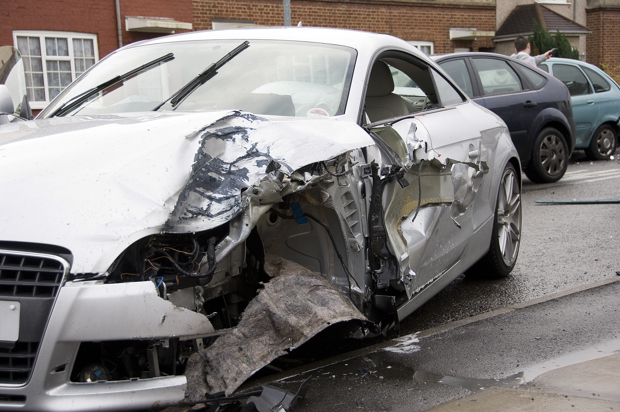
A car is written off by the insurance company when the cost to repair the vehicle exceeds its market value. At this point, the car declared a total loss, as it is no longer economical to repair and would be cheaper to replace rather than be fixed.
There are six different categories of write-off - Category A, Category B, Category S and Category N are in use today, with the latter two replacing Category C and Category D which were phased out in 2017. The current ABI code of practice for disposal of salvage is as follows:
Category A
This means the vehicle has been inspected and has been declared unsuitable or beyond repair. It can't be returned to the road, sold or any of its parts removed. It must be crushed in its entirety.
Category B
The vehicle has been inspected and it has been declared that its bodyshell cannot be repaired. The car cannot be sold and the bodyshell must be crushed. However, you can salvage parts from the car.
Category S
Formerly called Category C, a Cat S car has damage to the bodyshell but can be repaired. The car can be returned to the road, insured and sold again.
Category N
Formerly called Category D, the a Cat N car has non-structural damage. A Cat N car can be repaired, but it has been deemed too expensive by insurer to pay for it. The car's bodyshell has not been damaged, but be some safety critical items might need to be replaced, like steering and suspension parts. The car can be fixed and returned to the road, insured and sold again.
Can you buy back a car that has been written off?
This is one of the most common questions we get asked. But how do you buy back a vehicle you already own?
First, you need to understand what a 'write off' is. It is nothing to do with the damage done to the car in any way.
The expression 'write off' comes from the insurance term 'write down value'. This is the value of the asset. When a car costs more to repair than the write down value, it then becomes a 'write off'. It is nothing to do with the car being crushed in to a cube.
Contrary to what every insurer and pretty much anyone you speak to will tell you, yes you can retain a Cat B total loss.
So can you repair it yourself for less? People often think that bodyshops charge a fortune but in fact bodyshops make very little profit. Insurance companies, with their massive buying power, agree contracts with bodyshops based on volume that a private owner could never match.
You can of course use second hand or non-original parts which are cheaper. Going down this route can make it worthwhile - as long as there is no structural damage.
But just because your insurer says your car is beyond economical repair, is that really the case? Well, put simply, no.
Your contract of insurance will state that 'we indemnify you up to the market value of your vehicle'. This means in the contract your insurer has agreed to provide you financial compensation for the cost of repair up to the value of the vehicle.
What happens to a Cat N loss?
When an insurer advises that your vehicle is a 'constructive total loss' - and subsequently a Category N total loss - what they are actually doing is limiting what they pay out. When they sell your vehicle they will obtain money for the salvage.
But they can only do this when they, in fulfilling the contract by providing you with the market value, obtain the legal right to the salvage. In effect they have bought the vehicle from you. Up to the point you agree this, the salvage is always yours.
If you retain a Cat N, you are essentially being conned by your insurer. And here's why. Imagine the repair costs on your £10,000 car are £8500. Your insurer advises you that the car is a Cat N total loss, but you can retain the vehicle for £3000.
This means you get £7000, plus your car back unrepaired. But it now has the stigma of being a Cat N. And the market value is around 20% less than it would otherwise.
We already know it is going to cost £8500 to repair your car, so even using second hand parts you would struggle to repair it for the £7000 you received. Once you have spent your £7000 your car is now only worth £8000.
Had you asked for a cash in lieu settlement, you would have received the £8500 and still have a vehicle that is not a total loss. In other words, you would be at least £2000 better off.
Insurers will try everything they can to avoid giving you a cash in lieu settlement, which is a little odd when they have no issue sending a cheque for the market value.
Do not forget to read your contract of insurance. It will state you are indemnified up to the market value. The insurer only has the right to retain the vehicle when they have bought the vehicle off you. Up to that point the vehicle is always yours.
What about retaining a Category S total loss?
A Category S write-off - what used to be called Cat C - means the car has structural damage to its bodyshell, frame or chassis. We'd generally say it's time to walk away. Unless you are a professional commercial repairer or have access to one, we would not contemplate retaining it.
Can you keep a Category B loss?
Contrary to what every insurer and pretty much anyone you speak to will tell you, yes you can retain a Cat B total loss. The question again though is why?
These vehicles can never go back on the road. You will not be able to obtain a V5C and you will never be able to tax or insure it.
The only time we would suggest retaining a Cat B is if you either have a classic vehicle - and the parts are extremely rare and hard to come by - or you have a modified vehicle and wish to retain the parts you have fitted.
This could be on anything, from a vehicle with engine and suspension modifications, to a van that has been converted into a camper. There is a possible third - retaining a flood damaged vehicle and converting it into a track or off road vehicle.
You may find the insurer will request a certificate of destruction of the shell of the vehicle, once all the items required have been stripped.
What insurance group is my car?
Our handy tool shows you which car insurance group your car falls into.
- Abarth
- Alfa Romeo
- Alpine
- Aston Martin
- Audi
- Bentley
- BMW
- Cadillac
- Chevrolet
- Chrysler
- Citroen
- Cupra
- Dacia
- Daihatsu
- Dodge
- DS
- Ferrari
- Fiat
- Ford
- Honda
- Hyundai
- Infiniti
- Jaguar
- Jeep
- Kia
- Lamborghini
- Land Rover
- Lexus
- Lotus
- Maserati
- Mazda
- McLaren
- Mercedes-Benz
- MG
- MINI
- Mitsubishi
- Nissan
- Perodua
- Peugeot
- Polestar
- Porsche
- Proton
- Range Rover
- Renault
- Rolls-Royce
- Saab
- SEAT
- Skoda
- Smart
- SsangYong
- Subaru
- Suzuki
- Tesla
- Toyota
- Vauxhall
- Volkswagen
- Volvo
